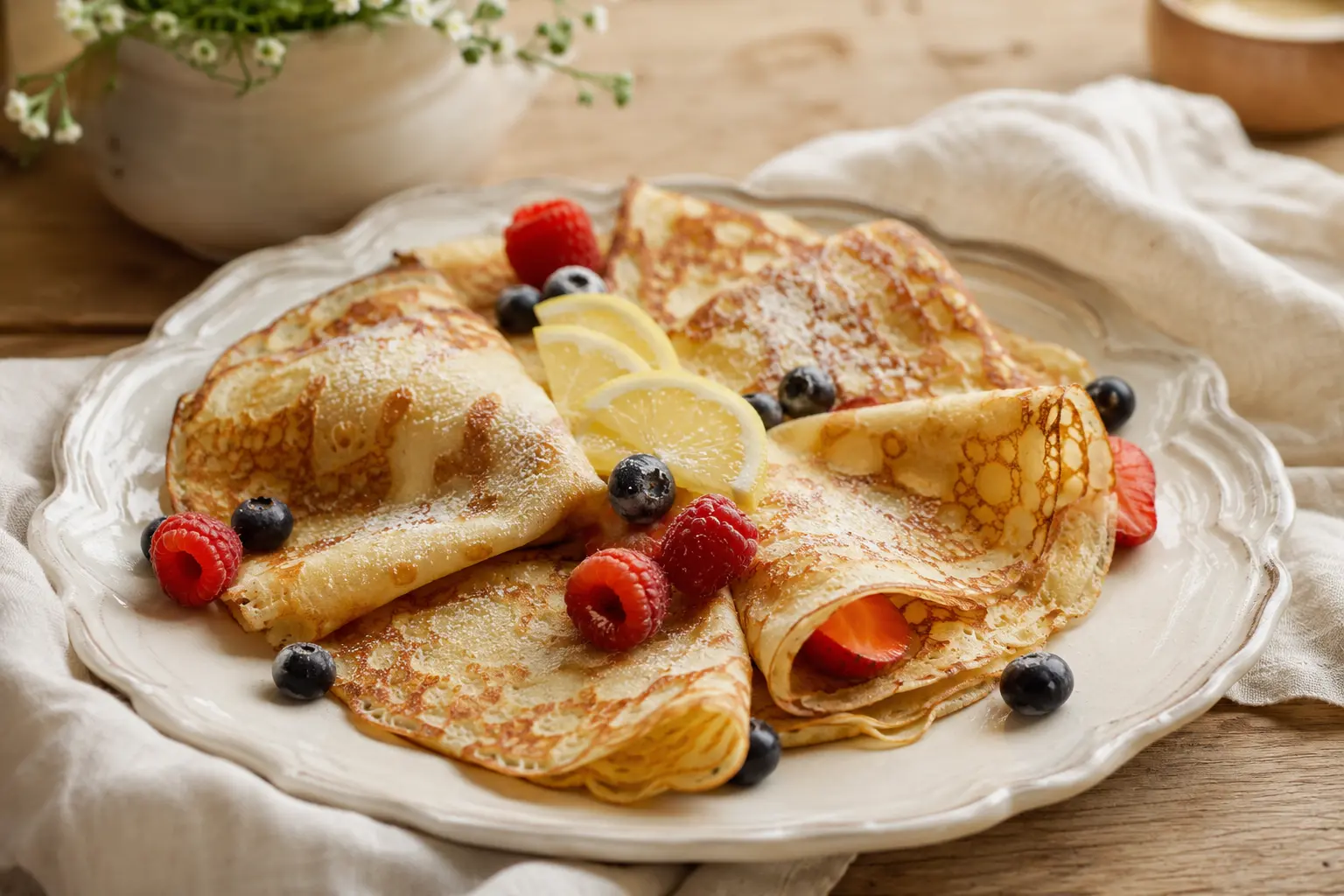
This classic French crêpe recipe makes thin, tender crêpes with delicate buttery edges and enough flexibility to fold around fruit, cream or savoury fillings. The simple blender batter rests before cooking so the flour hydrates and the gluten relaxes; that small pause helps each crêpe cook evenly instead of turning rubbery. Clear pan-heat, swirling, flipping and doneness cues make this an approachable recipe even if you have never made French crêpes before.
Dietary labels are based on the listed ingredients. For allergies or celiac disease, verify every packaged ingredient and guard against cross-contamination.
SEARCHED FOR, MADE RELIABLE
Why this recipe works
Resting the batter fully hydrates the flour and produces tender, flexible crêpes.
A scant quarter-cup of batter creates a thin layer without leaving fragile holes.
Moderate heat gives the surface time to set before the edges become dry.
Ingredient notes
Milk
Whole or 2% milk gives the most tender result; bring it close to room temperature for a smoother batter.
Butter
Melt it, then cool it slightly so it does not cook the eggs when blended.
Flour
Spoon flour into the measuring cup and level it rather than packing it, which can make crêpes heavy.
Practical substitutions
These are conservative alternatives based on standard kitchen practice; results may vary from the original recipe.
For savoury crêpes, omit the sugar and vanilla.
A neutral oil can grease the pan, although butter provides the classic flavour.
Troubleshooting
The batter will not spread
The pan may be too hot or the batter too thick. Lower the heat and whisk in milk one tablespoon at a time.
The crêpes tear when flipped
Cook until the top loses its wet shine and the edges lift easily before turning.
The crêpes feel rubbery
Avoid overmixing after the rest and cook only until lightly golden.
Storage and freezing
Stack cooled crêpes with parchment between them, cover and refrigerate for up to three days.
Freeze the parchment-separated stack airtight for up to two months; thaw overnight in the refrigerator.
THE BUTTER & BLOOM RECIPE
Classic French Crêpes
Print-friendly layout
Preparation time
22 min
Cooking time
20 min
Total time
24 hrs 52 min
Yield
4 servings
Cuisine
French-inspired
Updated
Ingredients
1 cup flour
2 eggs
1 1/4 cups milk
2 tablespoons melted butter
1 tablespoon sugar
1 teaspoon vanilla
Pinch of salt
Detailed directions for Classic French Crêpes
Add the milk, eggs, cooled melted butter, sugar, vanilla, salt and flour to a blender in that order. Blend for 15 to 20 seconds, scrape down any flour and blend again just until smooth.
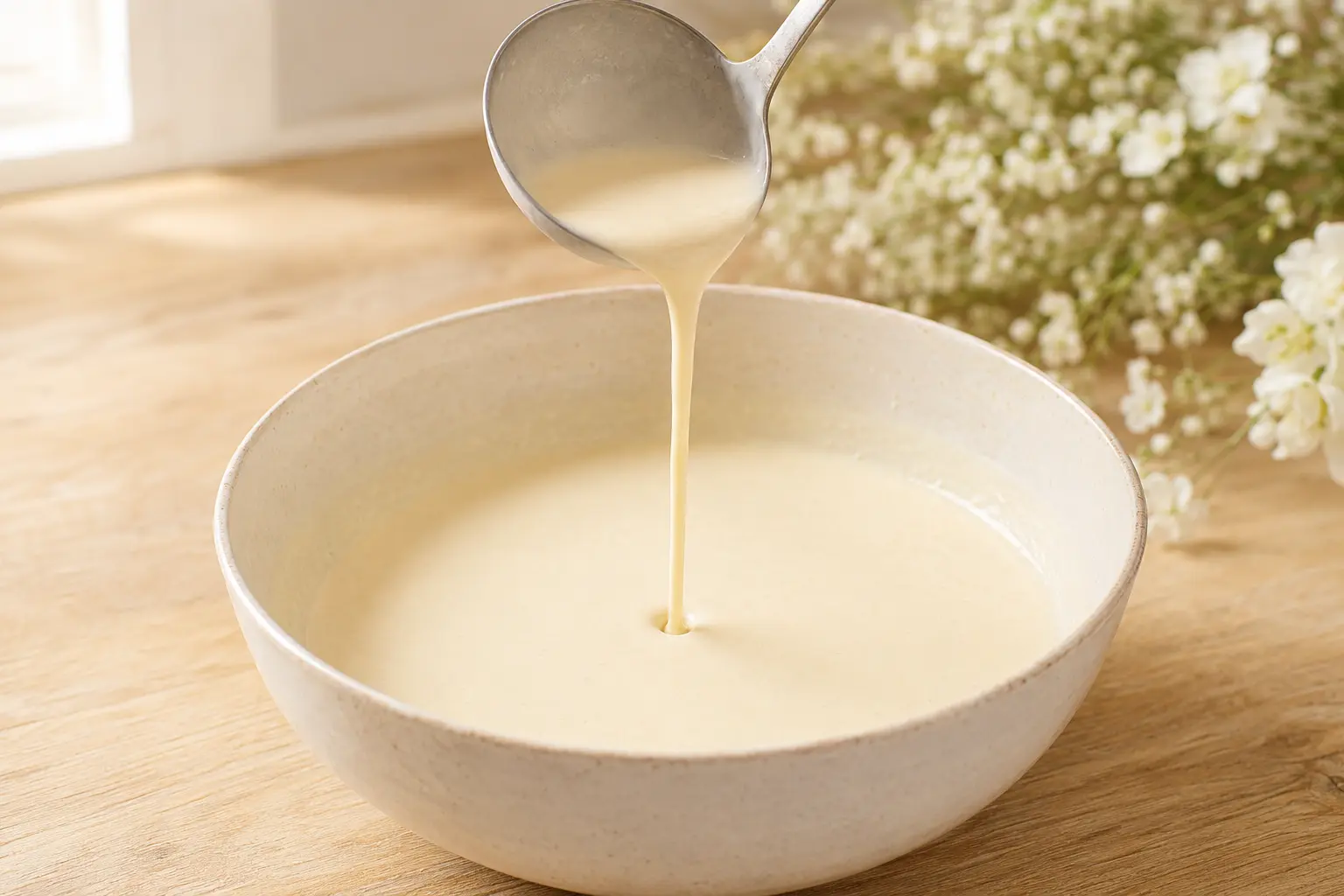
Cover and rest the batter for 30 minutes at room temperature, or refrigerate for up to 24 hours. It should pour like light cream; whisk in 1 tablespoon milk if it seems thick.Classic French Crêpes · After resting, the smooth batter should pour in a thin, steady ribbon like light cream
Set an 8- to 10-inch nonstick skillet over medium heat. When a drop of water sizzles gently, wipe the pan with a very thin film of butter.
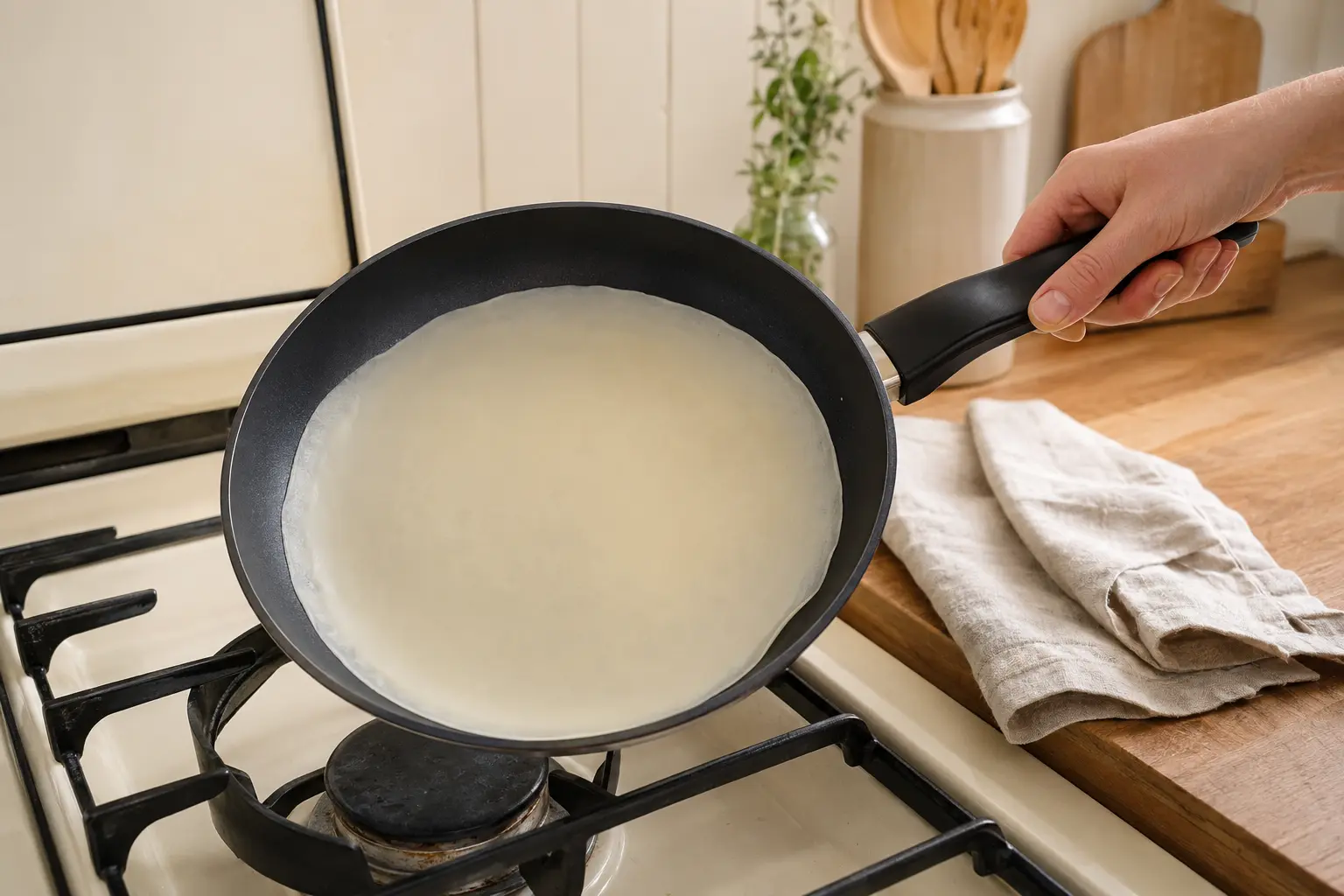
Lift the pan from the heat. Pour a scant 1/4 cup batter into the centre and immediately tilt and rotate the pan so the batter forms one thin, even circle.Classic French Crêpes · Lift and rotate the pan immediately so the batter reaches the edges in one thin layer
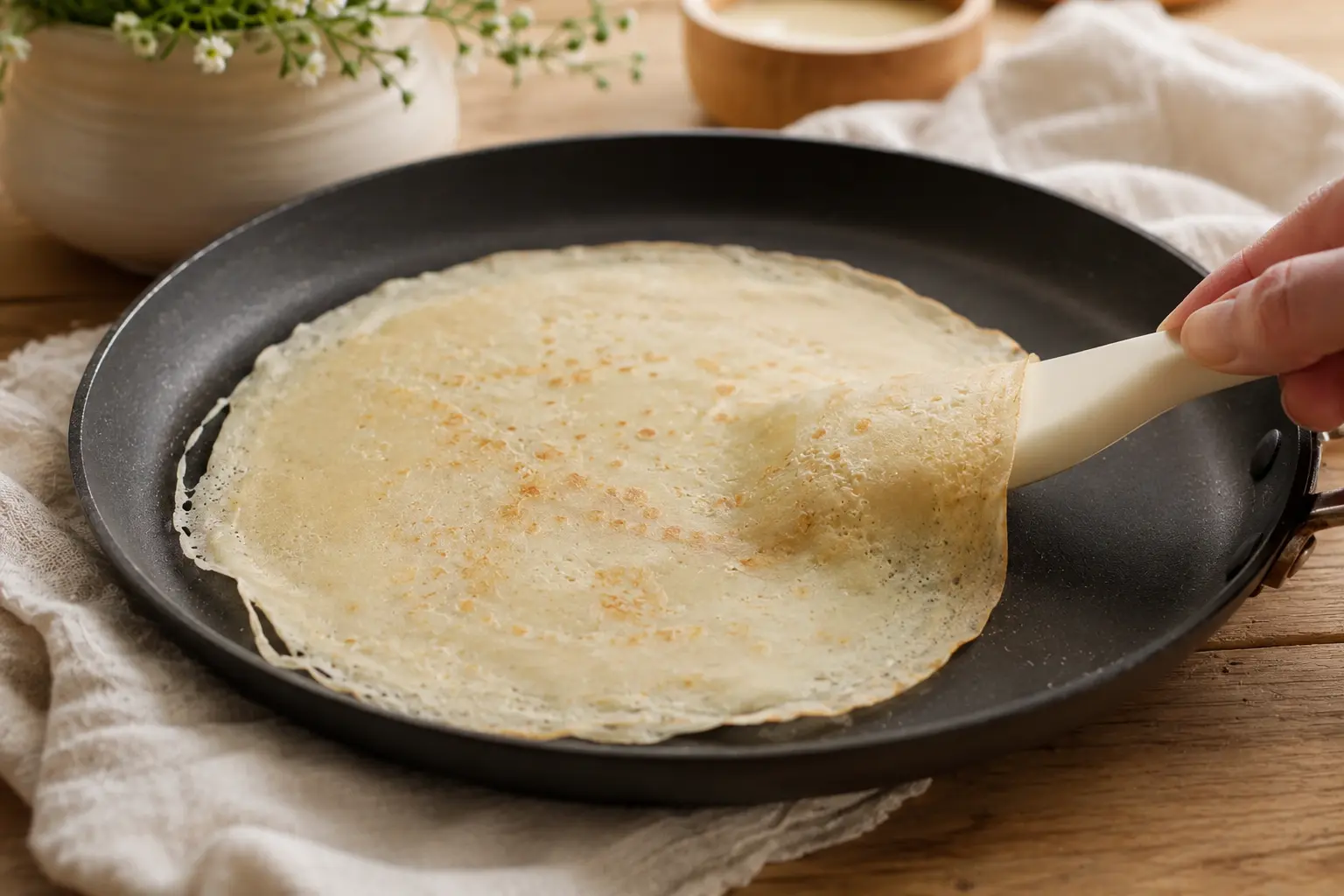
Return the pan to the heat. Cook for 45 to 75 seconds, until the top loses its wet shine, the underside has pale golden spots and the edges lift easily.Classic French Crêpes · Flip when the wet shine is gone and the dry edge releases cleanly from the pan
Slide a thin spatula underneath, flip carefully and cook the second side for about 15 to 25 seconds. Adjust the heat if the crêpe browns before the surface sets.
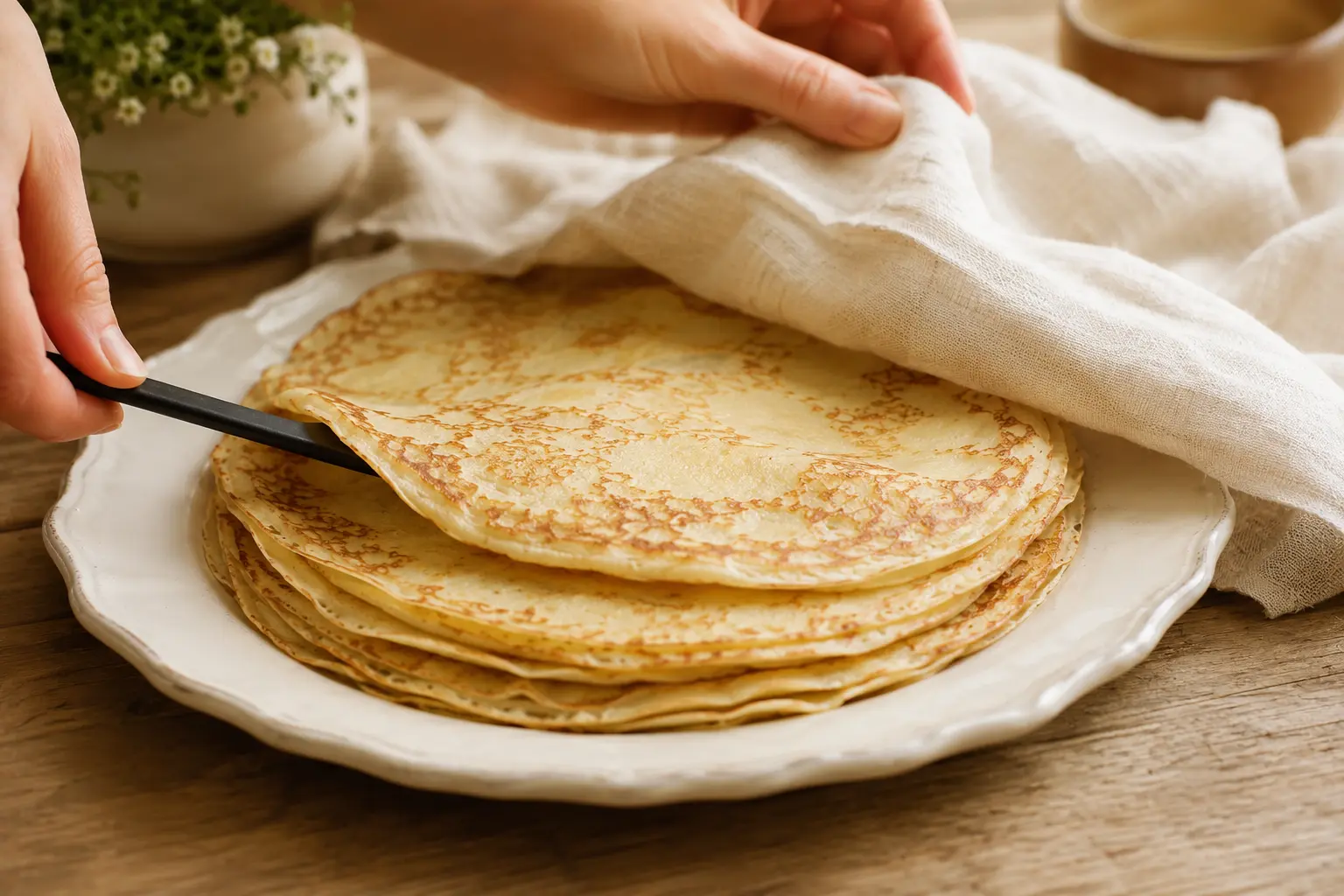
Transfer to a plate and cover with a clean towel. Repeat, buttering the pan only when it looks dry, and gently whisk the batter if it settles.Classic French Crêpes · Stack and cover the warm crepes so trapped steam keeps every layer soft and flexible
Serve warm with berries, lemon and sugar, chocolate spread or a savoury filling. Cool completely before storing.
Keywords: classic french crêpes · best french crêpe recipe · breakfast recipes · homemade recipe · easy family recipe
Published · Updated
READER REVIEWS
Be the first to review
☆☆☆☆☆
Loading reviews…
COMMON QUESTIONS
Classic French Crêpes FAQ
What is the best French crêpe recipe for beginners?
A reliable beginner recipe uses a thin rested batter, moderate pan heat and a clear visual cue: flip only after the wet shine disappears and the edge releases cleanly.
Why does crêpe batter need to rest?
Resting hydrates the flour and relaxes gluten, giving the crêpes a smoother, more flexible texture.
Do I need a special crêpe pan?
No. An 8- to 10-inch nonstick or well-seasoned skillet with low sides works well.
Can I make the batter ahead?
Yes. Cover and refrigerate it for up to 24 hours, then whisk gently before cooking.
KEEP EXPLORING
Recipes to make next
Continue with these closely related recipes from The Butter & Bloom kitchen.