Puffball flesh is mild and sponge-like, so it takes on browned butter, garlic and thyme especially well. This version uses a wide hot skillet and two batches to create golden edges before the garlic goes in. The recipe itself is simple; identifying a wild mushroom is not. The Ontario Poison Centre warns that eating outdoor mushrooms can cause serious illness or death and that only a mushroom expert can reliably distinguish poisonous from non-poisonous species. Use commercially sourced puffball or have every wild specimen individually confirmed by a qualified mushroom expert. The images below are AI-assisted illustrations for explaining the written checks—not a substitute for identification.
Dietary labels are based on the listed ingredients. For allergies or celiac disease, verify every packaged ingredient and guard against cross-contamination.This editorial recipe has not yet been cook-tested by Jo. Timing, yield and serving size are estimates. Use only commercially sourced puffball or a wild specimen individually confirmed by a qualified mushroom expert; the photographs and written cues on this page cannot identify a mushroom safely.
BEFORE YOU HARVEST OR COOK
Puffball harvesting and discard guide
Critical safety warning: Do not use this page, an app or an AI image to decide whether a wild mushroom is edible. The Ontario Poison Centre advises that only a mushroom expert can reliably tell poisonous and non-poisonous mushrooms apart. Use commercially sourced puffball or obtain in-person identification of each specimen before cooking.
When to look
In southern Ontario, giant puffballs are most often encountered from late summer into early fall—roughly August through October—especially after suitable moisture. Weather can move the season earlier or later.
Where they appear
Look on soil in grassy lawns, meadows, pastures, parks and open woodland. Habitat is only a clue, never proof. Check landowner permission and local foraging rules; avoid protected areas, roadsides, pesticide-treated lawns and polluted ground.
EXPERT CONFIRMATION STILL REQUIRED
Only after expert confirmation: young interior
Illustration only. A young expert-confirmed puffball candidate has dense, uniform pure-white flesh from edge to edge, with no internal mushroom outline.
Solid and uniform
Pure white throughout
No cap, stem or gills inside
Firm and fresh, not powdery or slimy
AUTOMATICALLY DISCARD
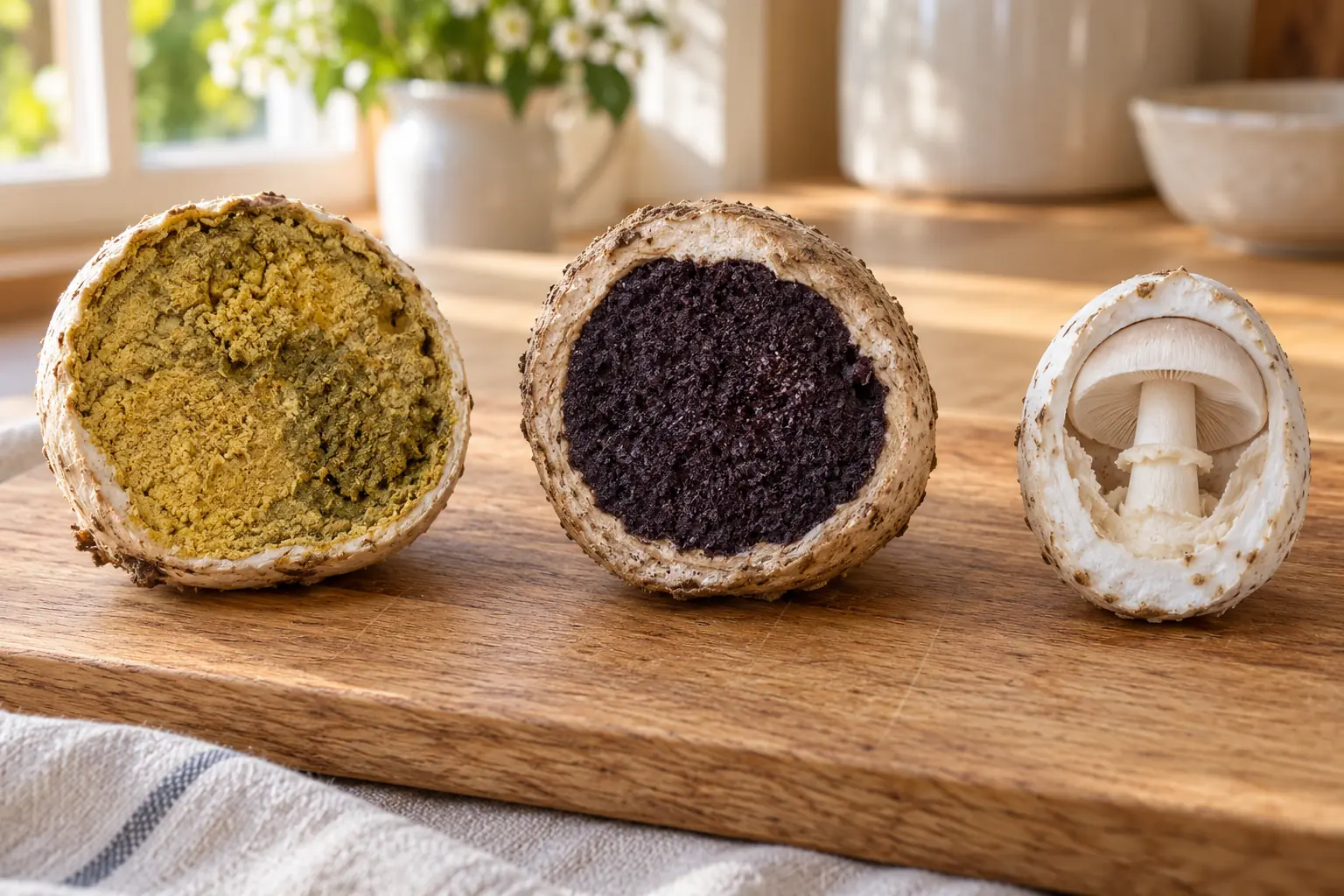
Discard: colour, dark centre or internal structure
Illustration only. Any discolouration, dark centre, powdery flesh or developing cap, stem or gills is an automatic rejection.
Yellow, green, tan or brown flesh
Purple or black centre
Visible cap, stem or gills
Softness, slime, insects, powder or off odour
Responsible harvesting checklist
Photograph the mushroom in place and keep the entire specimen, including its base, intact for expert identification.
Choose young-looking, firm specimens and carry them in a rigid basket or paper bag so they are not crushed or trapped in condensation.
After expert confirmation, cut every specimen vertically from top to bottom before cleaning or cooking.
The usable interior must be uniformly solid and pure white. One questionable area means the whole specimen is discarded.
A wide hot skillet and two uncrowded batches let the sponge-like puffball brown instead of steaming.
A small amount of neutral oil raises the heat tolerance of the first butter addition while preserving buttery flavour.
Garlic and thyme go in only after the mushroom is browned, protecting the garlic from burning during the longer sauté.
Lemon added away from direct heat brightens the rich butter without slowing browning in the pan.
Ingredient notes
Puffball mushroom
Use 1 lb (450 g) of usable pure-white flesh only after commercial sourcing or individual confirmation by a qualified mushroom expert. This page cannot identify a wild mushroom.
Butter and oil
Divide the butter among the two batches and the final garlic stage. The oil helps the first butter addition tolerate a hot skillet without replacing its flavour.
Garlic
Mince it finely and add it near the end. Sixty to ninety seconds is enough to make it fragrant without turning bitter.
Lemon and parsley
Add both after the skillet leaves the heat so their fresh flavour stays distinct.
Practical substitutions
These are conservative alternatives based on standard kitchen practice; results may vary from the original recipe.
Do not substitute any unidentified wild mushroom. If expert-confirmed puffball is unavailable, make the same garlic-butter method with commercially cultivated king oyster or cremini mushrooms, understanding the texture and cooking time will differ.
Fresh thyme gives the cleanest flavour, but 1/2 teaspoon dried thyme can replace 2 teaspoons fresh leaves.
A firm plant-based butter can replace dairy butter for a vegan variation, but browning and salt level vary by brand.
Troubleshooting
The mushroom turned watery
The pan was crowded, the pieces were damp or the heat was too low. Dry the flesh thoroughly and cook only one uncrowded layer at a time.
The pieces absorbed all the butter
Puffball is naturally absorbent. Keep the measured fat divided among the batches rather than adding unmeasured butter each time the pan looks dry.
The garlic tastes bitter
Add it only after both batches are browned, lower the heat to medium and cook it for no more than 60 to 90 seconds.
The interior has colour or a visible structure
Stop. Discard the entire specimen. Do not trim around yellow, green, tan, brown, purple or black flesh, and never eat a specimen showing a cap, stem or gills inside.
Storage and freezing
Cook only fresh, firm, expert-confirmed puffball with a uniform pure-white interior; do not try to preserve an aging or discoloured specimen by cooking it.
Refrigerate cooked leftovers in a shallow airtight container within 2 hours and use within 2 to 3 days.
Reheat leftovers to 165°F (74°C). The texture is best when reheated briefly in a skillet rather than a microwave.
THE BUTTER & BLOOM RECIPE
Butter and Garlic Sautéed Puffball Mushrooms
Print-friendly layout
Preparation time
25 min
Cooking time
15 min
Total time
40 min
Yield
4 side servings (estimated)
Cuisine
North American
Updated
Ingredients
1 lb (450 g) young giant puffball mushroom flesh, weighed after expert identification and trimming
3 tablespoons (42 g) unsalted butter, divided
1 tablespoon (15 mL) neutral cooking oil, such as canola or avocado oil
4 medium garlic cloves, finely minced
2 teaspoons fresh thyme leaves, or 1/2 teaspoon dried thyme
1/2 teaspoon fine salt, plus more only after tasting
Detailed directions for Butter and Garlic Sautéed Puffball Mushrooms
Confirm the mushroom before it enters the kitchen — Use commercially sourced puffball or have each wild specimen individually identified by a qualified mushroom expert or mycologist. A young giant puffball is usually a large, smooth, white ball growing on soil, but appearance and an AI image are not enough to establish safety. Never eat a wild mushroom based only on this page, an app or an online photograph.Butter and Garlic Sautéed Puffball Mushrooms · AI instructional image, not an identification tool: A qualified expert must confirm the specimen; a young puffball candidate has uniform pure-white flesh with no internal mushroom structure.
Cut and reject before cleaning — Slice every specimen vertically from top to bottom. The entire interior must be solid, uniform and pure white, with no outline of a developing cap, stem or gills. Discard the whole specimen if any section is yellow, green, tan, brown, purple or black; powdery, slimy, soft, insect-tunnelled or foul-smelling; or contains any internal mushroom structure. When uncertain, do not eat it.Butter and Garlic Sautéed Puffball Mushrooms · AI instructional image, not an identification tool: Discard any specimen with discolouration, a dark centre, internal cap or gills, decay, insects or uncertainty.
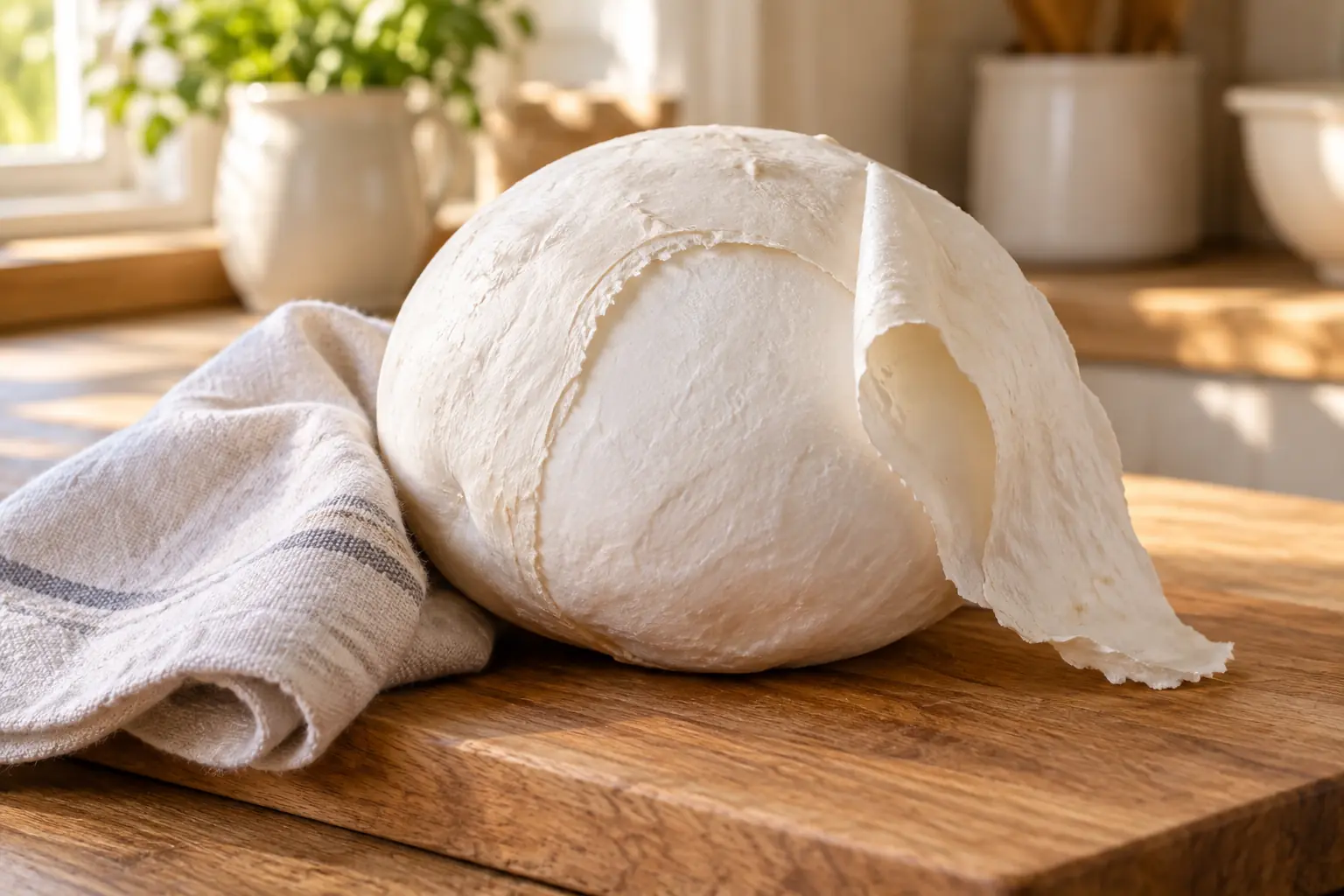
Clean and trim gently — Brush away loose soil and wipe the confirmed puffball with a barely damp clean cloth. Do not soak its sponge-like flesh. Trim the base and bruised areas, and peel away the outer skin if it is leathery or tough. Check the newly exposed flesh again and discard the mushroom if any discolouration or structure appears.Butter and Garlic Sautéed Puffball Mushrooms · AI instructional image: Wipe rather than soak, trim bruises and peel a leathery outer skin while checking the exposed flesh again.
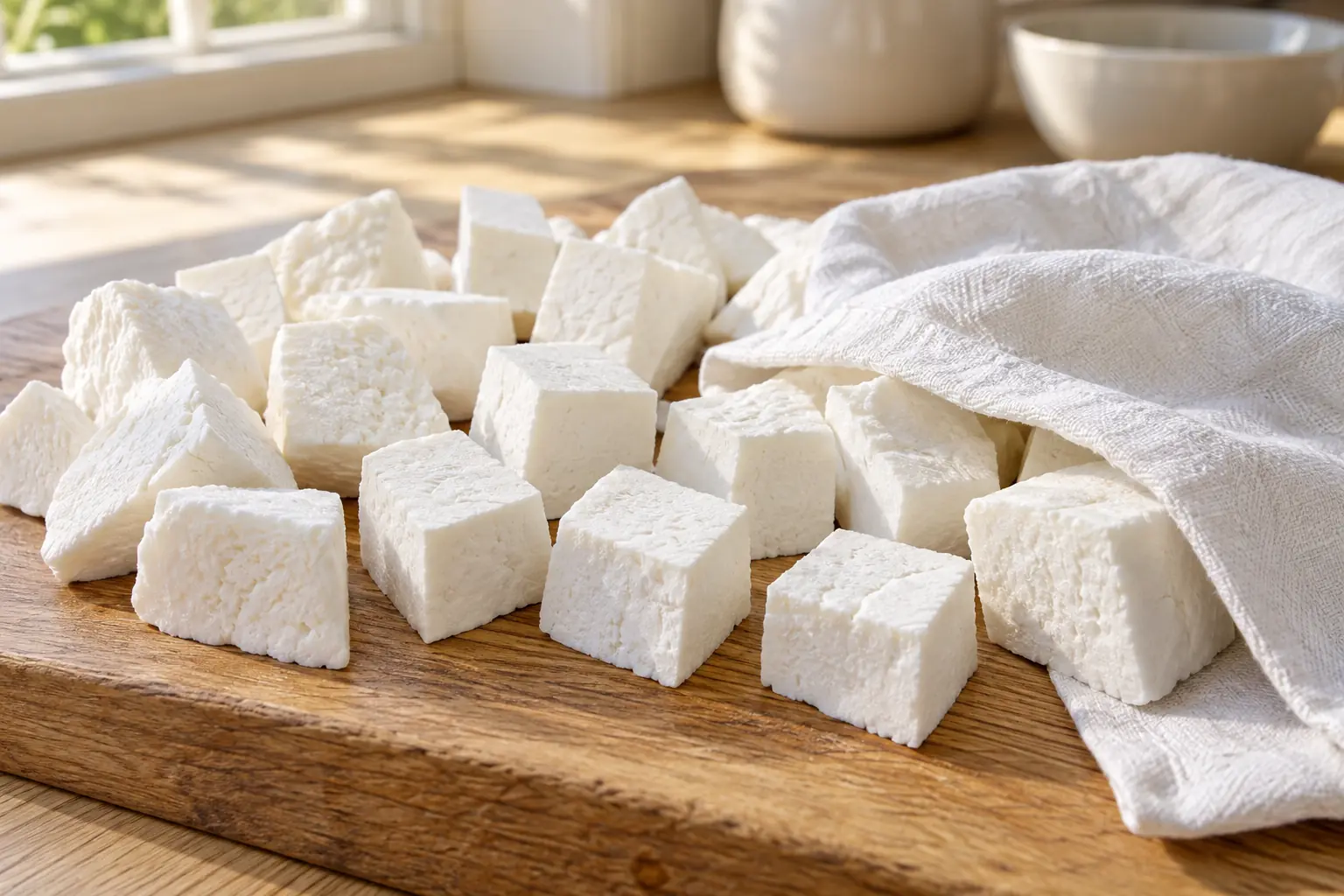
Cut and dry the mushroom — Cut the verified pure-white flesh into roughly 1-inch (2.5 cm) pieces so they brown at a similar rate. Pat every surface dry. Mince the garlic, strip the thyme leaves and chop the parsley before heating the pan because the final stage moves quickly.Butter and Garlic Sautéed Puffball Mushrooms · AI instructional image: Cut even pieces and dry every surface so the mushroom browns rather than steams.
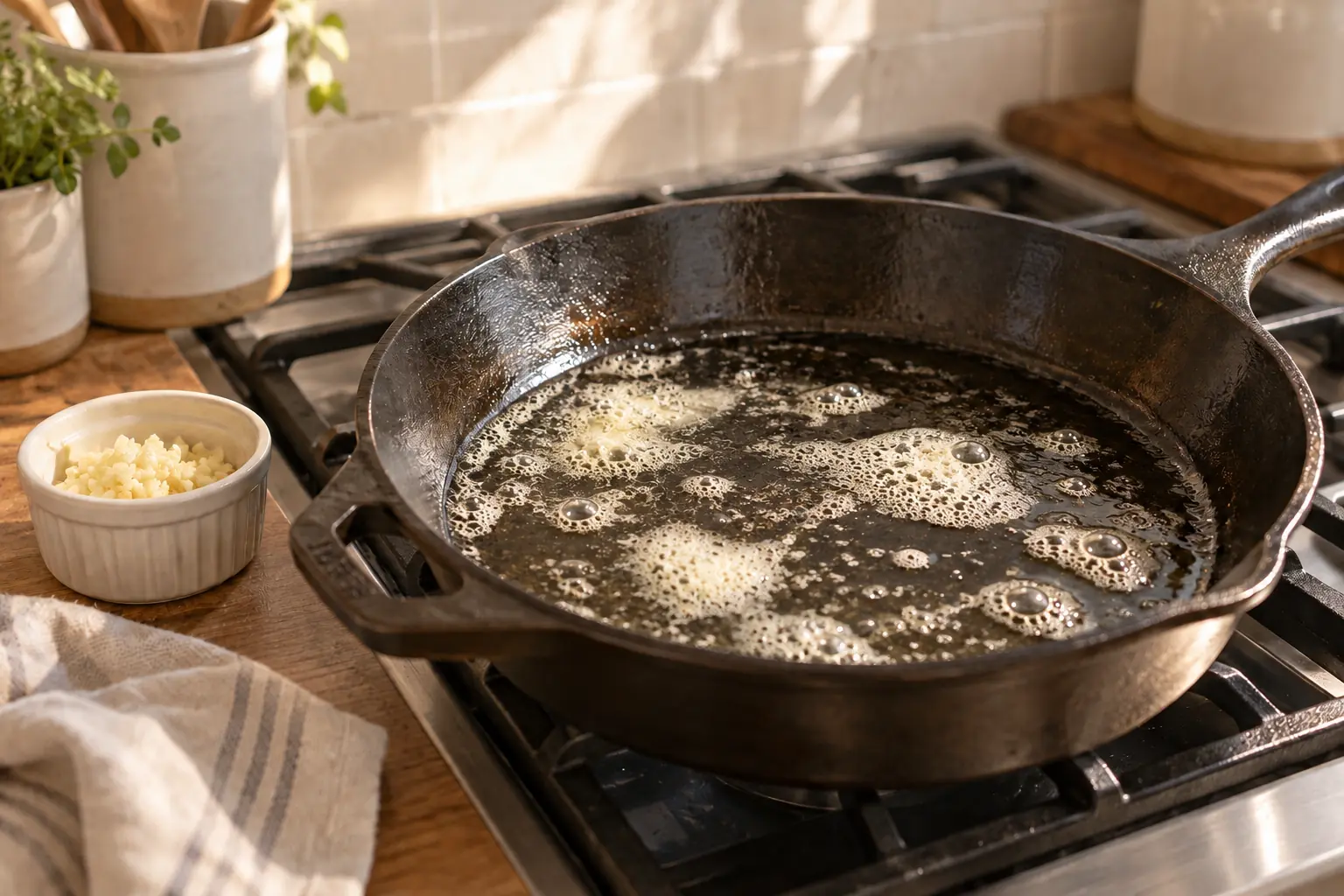
Heat the skillet — Set a wide 12-inch heavy skillet over medium-high heat. Add the oil and 1 tablespoon of the butter. Heat until the butter is foaming and the pan is hot, but stop before the milk solids turn dark or the fat smokes.Butter and Garlic Sautéed Puffball Mushrooms · AI instructional image: Heat the oil and first tablespoon of butter until foaming, keeping the garlic out of the pan for now.
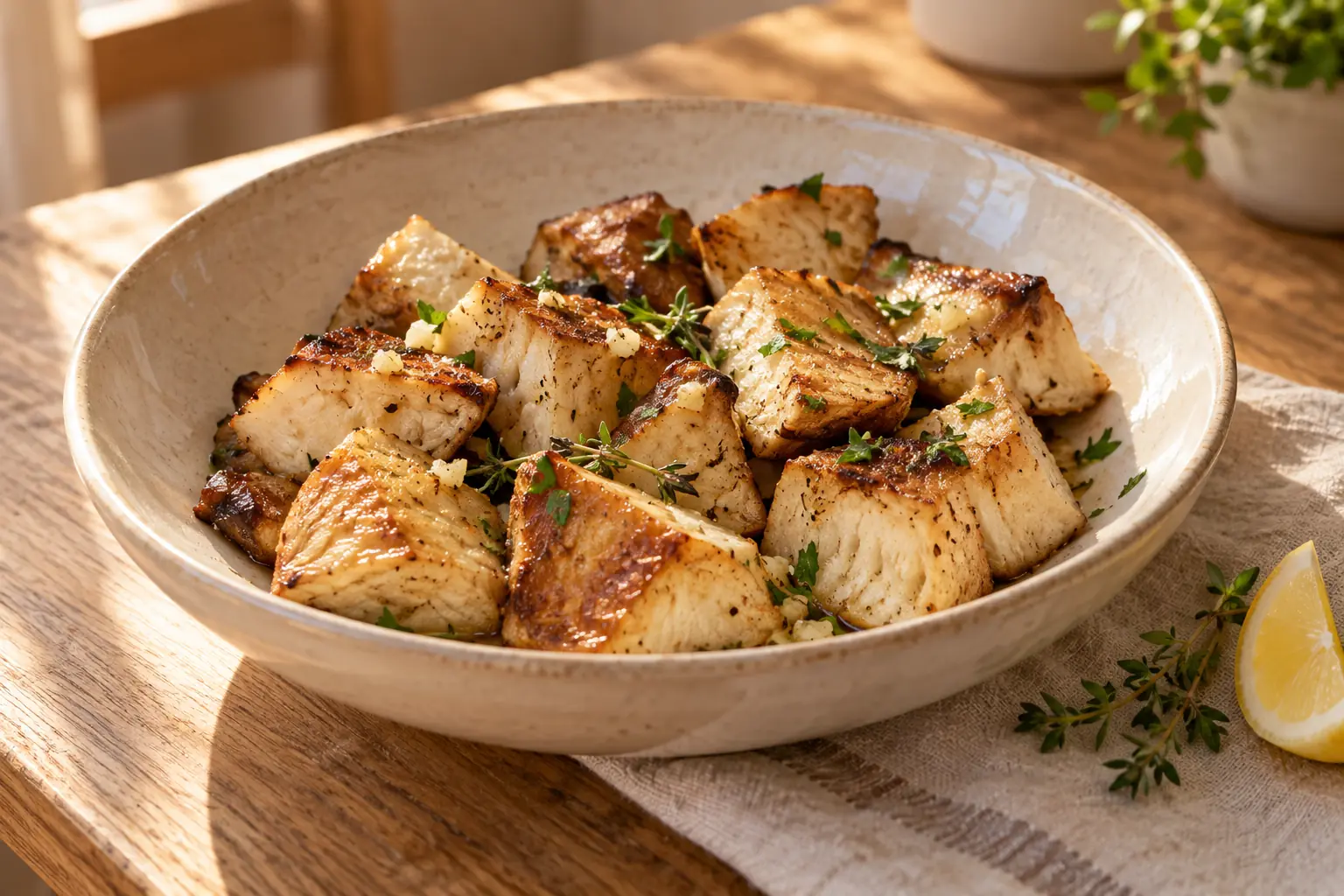
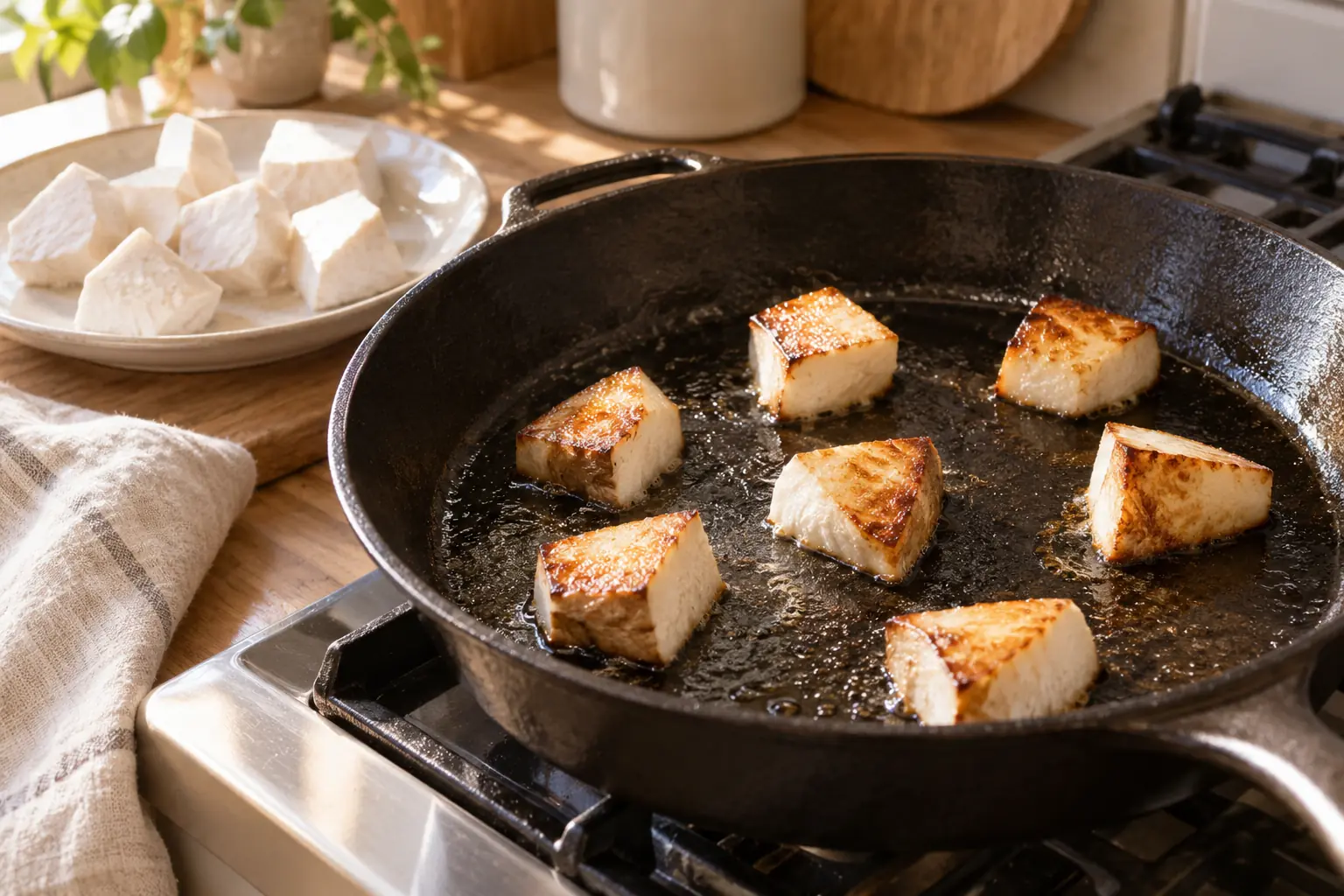
Brown in uncrowded batches — Add half the puffball in one uncrowded layer. Leave it undisturbed for 3 to 4 minutes, until the underside is deep golden, then turn and cook for 2 to 3 minutes more. Transfer to a clean plate. Add 1 tablespoon butter and repeat with the remaining mushroom. Crowding traps steam and prevents browning.Butter and Garlic Sautéed Puffball Mushrooms · AI instructional image: Brown in two batches and turn only after the first side develops a deep golden crust.
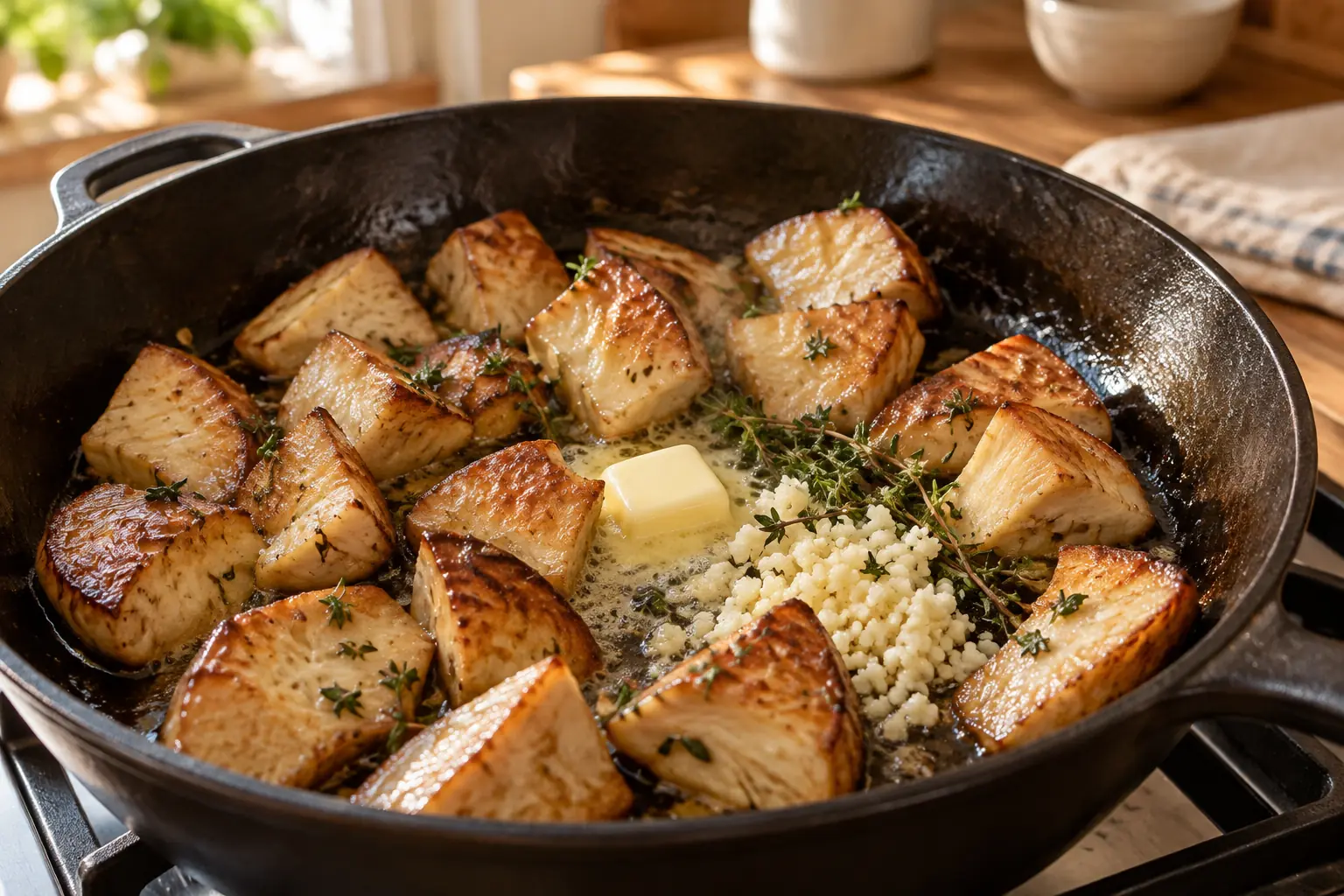
Add the garlic and thyme — Return all the browned mushroom to the skillet and reduce the heat to medium. Add the remaining 1 tablespoon butter, garlic, thyme, salt and pepper. Toss for 60 to 90 seconds, only until the garlic smells fragrant and stays pale; browned garlic will make the dish bitter.Butter and Garlic Sautéed Puffball Mushrooms · AI instructional image: Add garlic and thyme only after browning, then toss briefly so the garlic stays pale.
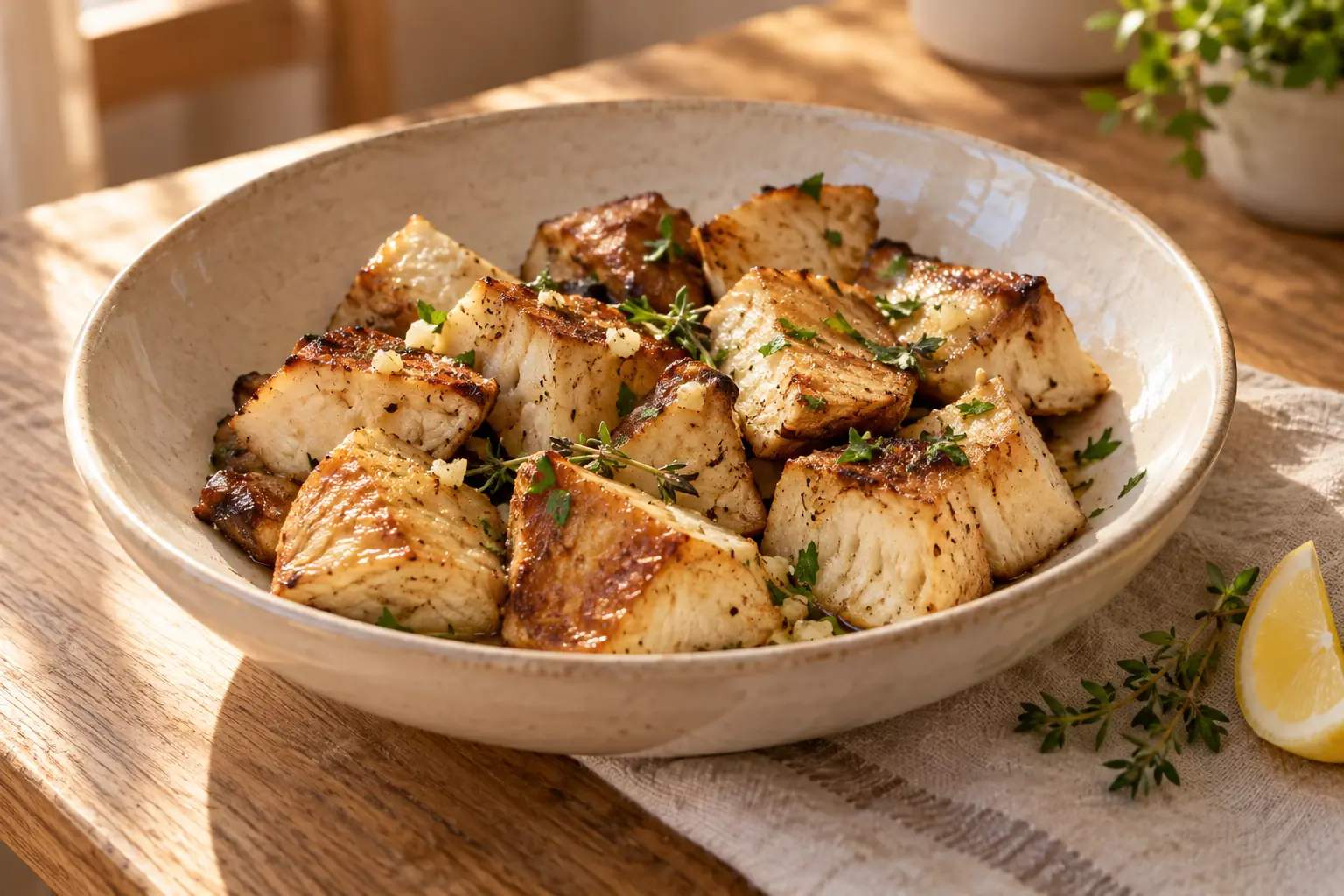
Finish, serve and store — Remove the skillet from the heat. Toss with the lemon juice and parsley, taste and add more salt only if needed. Serve immediately. Refrigerate leftovers in a shallow airtight container within 2 hours, use within 2 to 3 days and reheat to 165°F (74°C).Butter and Garlic Sautéed Puffball Mushrooms · AI instructional image: Finish off the heat with lemon and parsley, then serve the browned puffball immediately.
When are giant puffball mushrooms in season in Ontario?
They are most often found from late summer into early fall, commonly around August through October, but rainfall and local weather can shift the window. Season alone never confirms identity or edibility.
Where do giant puffballs grow?
They commonly appear on soil in grassy lawns, meadows, pastures, parks and open woodland. Collect only where foraging is legal and the landowner permits it, and avoid roadsides, treated lawns and contaminated ground.
What should an edible-stage puffball look like inside?
After a qualified expert confirms the species, cut it from top to bottom. Young usable flesh must be solid, uniform and pure white from edge to edge, without an internal outline of a cap, stem or gills. A picture cannot establish that a specimen is safe.
When should I discard a puffball mushroom?
Discard the entire specimen if the interior is yellow, green, tan, brown, purple or black; if it is powdery, soft, slimy, insect-damaged or foul-smelling; if any cap, stem or gills are visible inside; or if identification is uncertain.
Can I eat puffball mushrooms raw?
No. Use only a correctly identified young specimen and cook it thoroughly. If it is your first time eating an expert-confirmed species, start with a small cooked portion because individual sensitivities can occur.
KEEP EXPLORING
Recipes to make next
Continue with these closely related recipes from The Butter & Bloom kitchen.
 ← All recipes
 Photography may include disclosed AI-assisted illustrations. Read the image policy.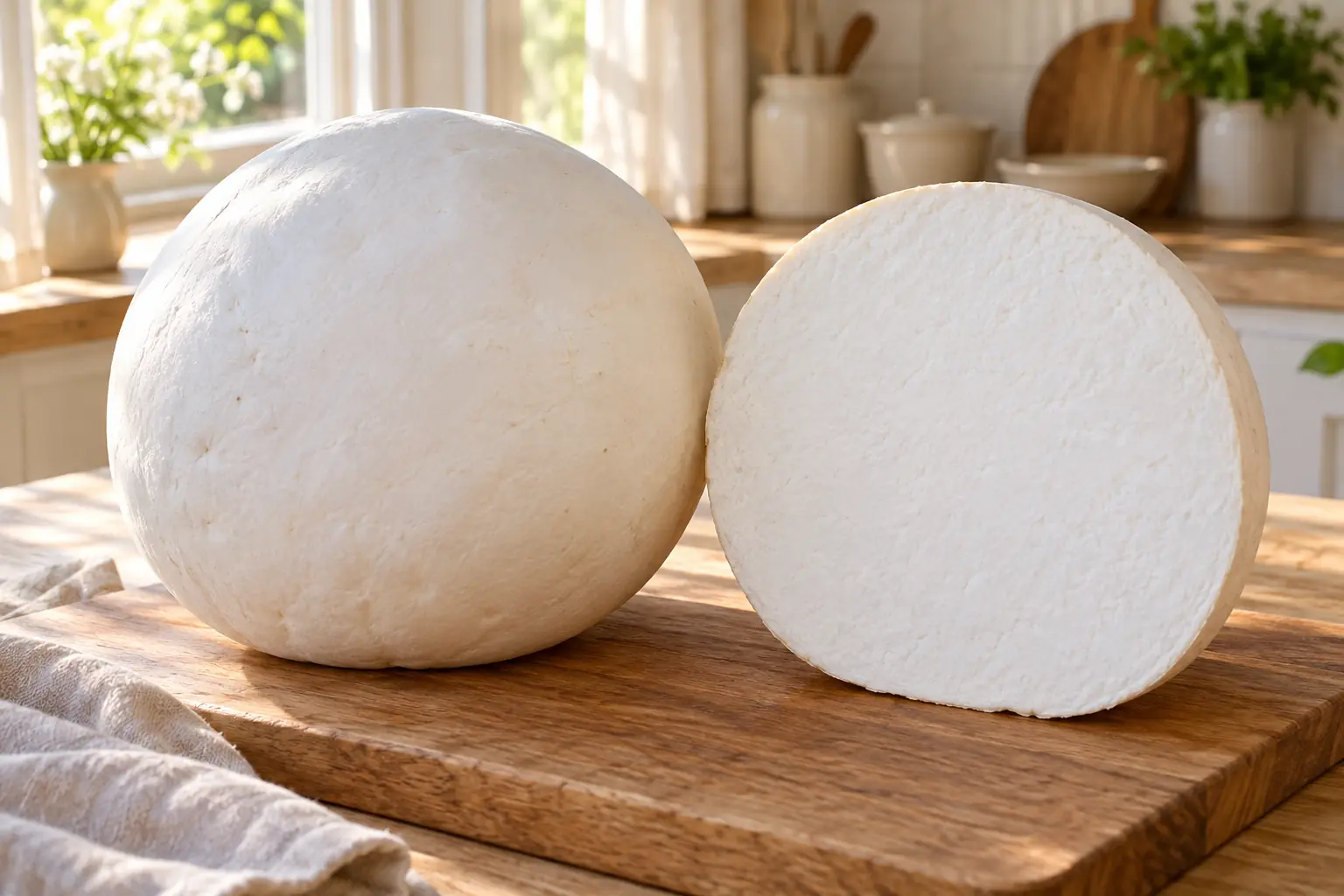
 Trending
 Salads
 Chicken
 Trending