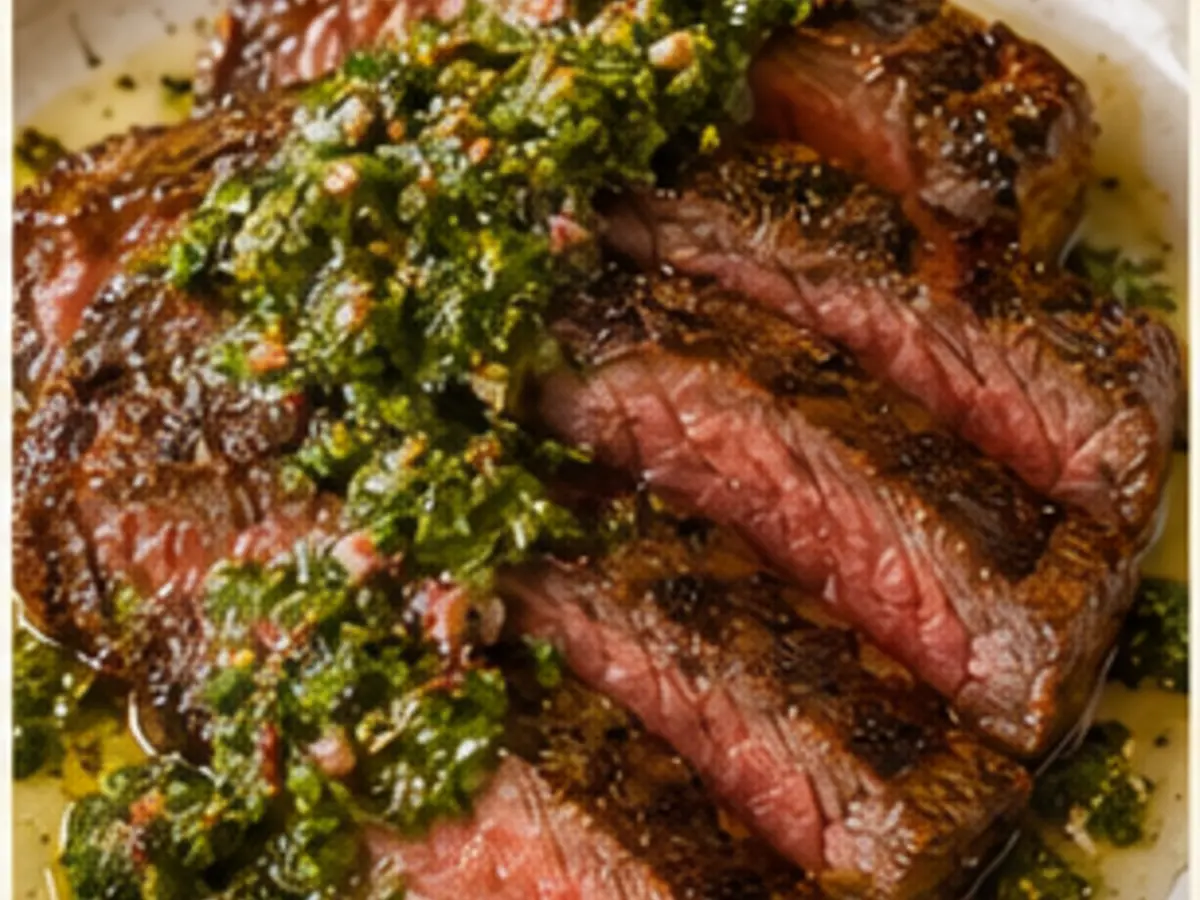
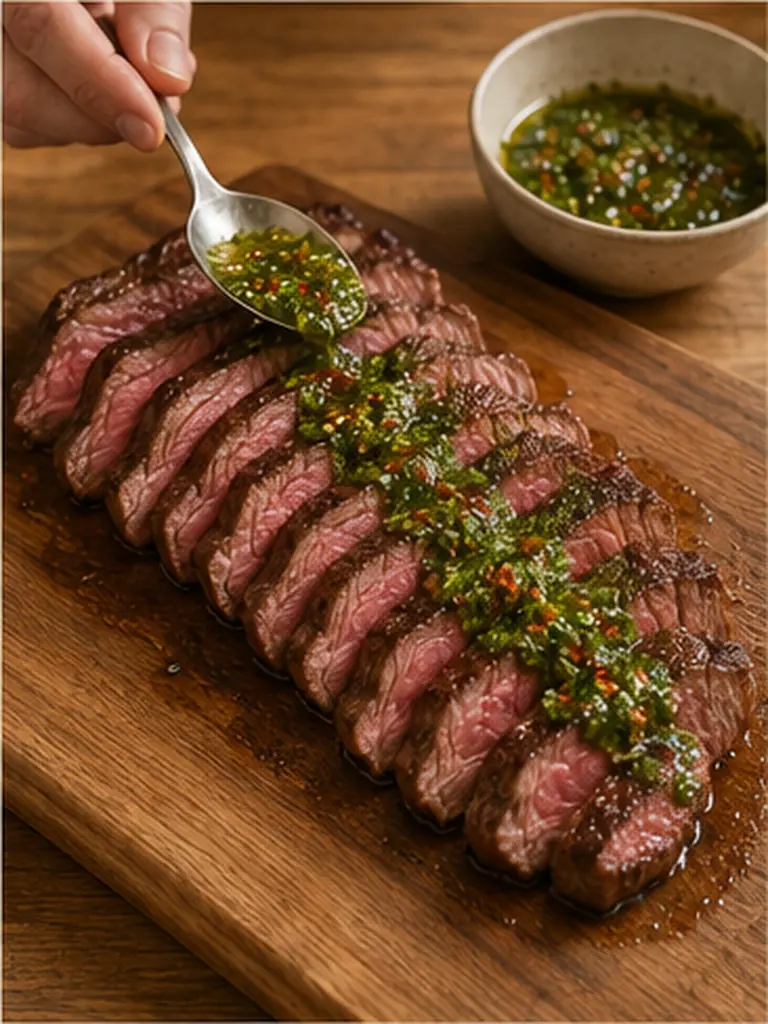
Juicy pan-seared strip steaks with a loose, hand-chopped parsley and oregano chimichurri, plus clear pan-heat, temperature and slicing cues.
Dietary labels are based on the listed ingredients. For allergies or celiac disease, verify every packaged ingredient and guard against cross-contamination.This editorial recipe is reviewed for ingredient consistency, technique and food safety; it is not labelled as personally tested by Jo.
TIMELY RECIPE, CLEAR METHOD
Why this recipe works
Dry, evenly thick steaks make better contact with the hot skillet and develop a deeper crust.
Hand-chopping thoroughly dried herbs keeps the chimichurri loose and textured instead of watery or pasty.
Checking the centre through the side with a digital thermometer gives a more useful doneness cue than time alone.
An 8- to 10-minute rest lets the temperature even out before the steak is sliced across the grain.
Ingredient notes
Steaks
Choose two boneless strip or rib-eye steaks of equal thickness, ideally about 1 1/4 inches. Thickness matters more than weight when estimating pan time.
Parsley and oregano
Measure the leaves after removing tough stems. Rinse, then dry extremely well so water does not dilute the olive oil sauce.
Red-wine vinegar
Its clean acidity balances the beef and olive oil. Add it before judging whether the sauce needs any more salt.
Neutral oil
Use avocado or canola oil for the hot skillet. Extra-virgin olive oil belongs in the uncooked chimichurri.
Red-pepper flakes
The measured 1/2 teaspoon gives gentle warmth; use less if your flakes are very fresh or you prefer a mild sauce.
Practical substitutions
These are conservative alternatives based on standard kitchen practice; results may vary from the original recipe.
Top sirloin can replace strip or rib-eye; start checking early because the leaner meat can dry faster.
Cilantro can replace up to half the parsley for a different herbal flavour.
White-wine vinegar can replace red-wine vinegar, although the sauce will taste slightly sharper and lighter.
Dried oregano is more concentrated than fresh; use 2 teaspoons dried oregano and let the sauce stand for 20 minutes before serving.
Troubleshooting
The steak does not brown
Pat it completely dry, preheat the empty heavy skillet for 2 to 3 minutes and do not move the first side before it releases.
The pan is smoking heavily
Lift it briefly from the burner, lower the heat and continue once the smoke subsides. Shimmering oil is hot enough.
The steak is overcooked
Check the thickest steak early through the side and transfer each piece to the clean board as soon as it reaches your chosen temperature.
The chimichurri is watery
Dry the herbs thoroughly and chop them by hand. Stir rather than blend, and add the measured olive oil only after the vinegar.
The sauce tastes harsh
Let it stand for 15 to 20 minutes so the garlic and vinegar mellow, then adjust with a little more olive oil.
Storage and freezing
Refrigerate cooked steak and chimichurri in separate covered containers within 2 hours.
Use the cooked steak within 3 to 4 days and the fresh chimichurri within 3 days; the herbs darken over time.
Reheat only the steak portion needed to 165°F (74°C), then add the cold sauce. Discard any reheated portion that is not eaten.
Freeze the unsauced steak for up to 2 months for best quality. Chimichurri is best fresh, but may be frozen in a small airtight container for up to 1 month.
THE BUTTER & BLOOM RECIPE
Pan-Seared Chimichurri Steak
Print-friendly layout
Preparation time
20 min
Cooking time
12 min
Total time
50 min
Yield
4 servings
Cuisine
Argentinian-inspired
Updated
Ingredients
2 boneless strip or rib-eye steaks, 10 to 12 oz (285 to 340 g) each and about 1 1/4 inches thick
1 1/4 teaspoons fine salt, divided
1/2 teaspoon freshly ground black pepper
1 tablespoon (15 mL) neutral high-heat oil, such as avocado or canola
1 packed cup (35 g) fresh flat-leaf parsley leaves, rinsed and thoroughly dried
Detailed directions for Pan-Seared Chimichurri Steak
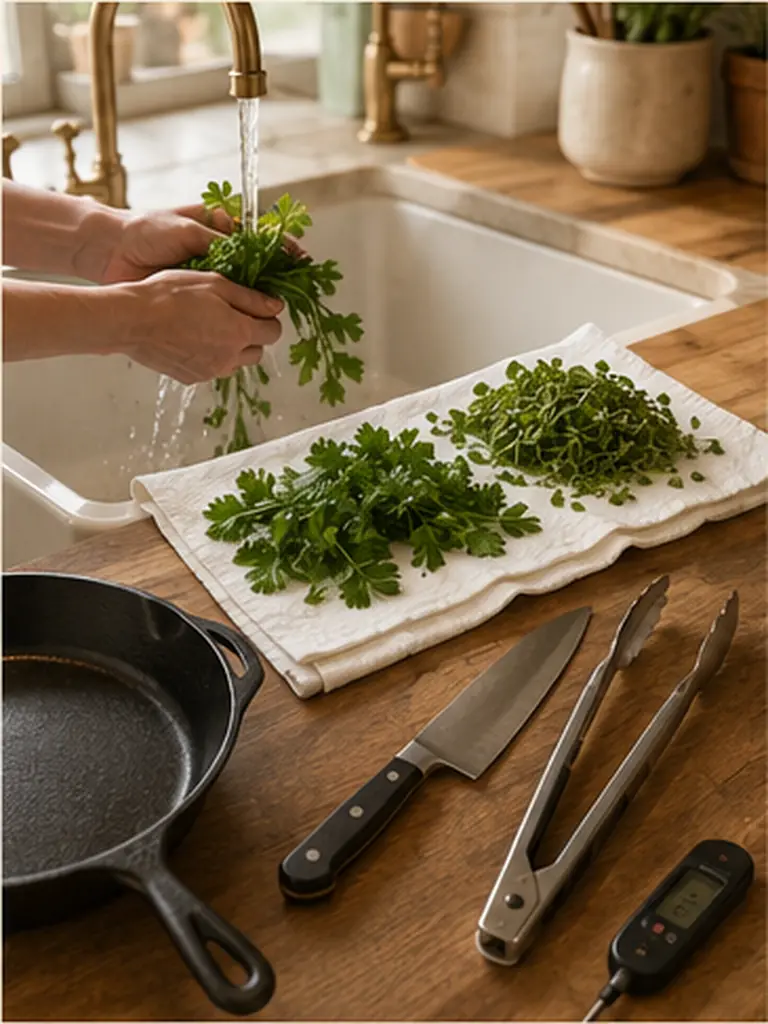
Prepare the herbs and tools — Rinse the parsley and oregano under cool running water and dry them thoroughly in clean towels or a salad spinner. Set a heavy 12-inch skillet, tongs and digital thermometer beside the stove. Keep a clean board and plate for the cooked steaks separate from anything that will touch raw beef.Pan-Seared Chimichurri Steak · AI instructional image: Wash and dry the herbs and set out clean cooked-meat tools before opening the steak package.
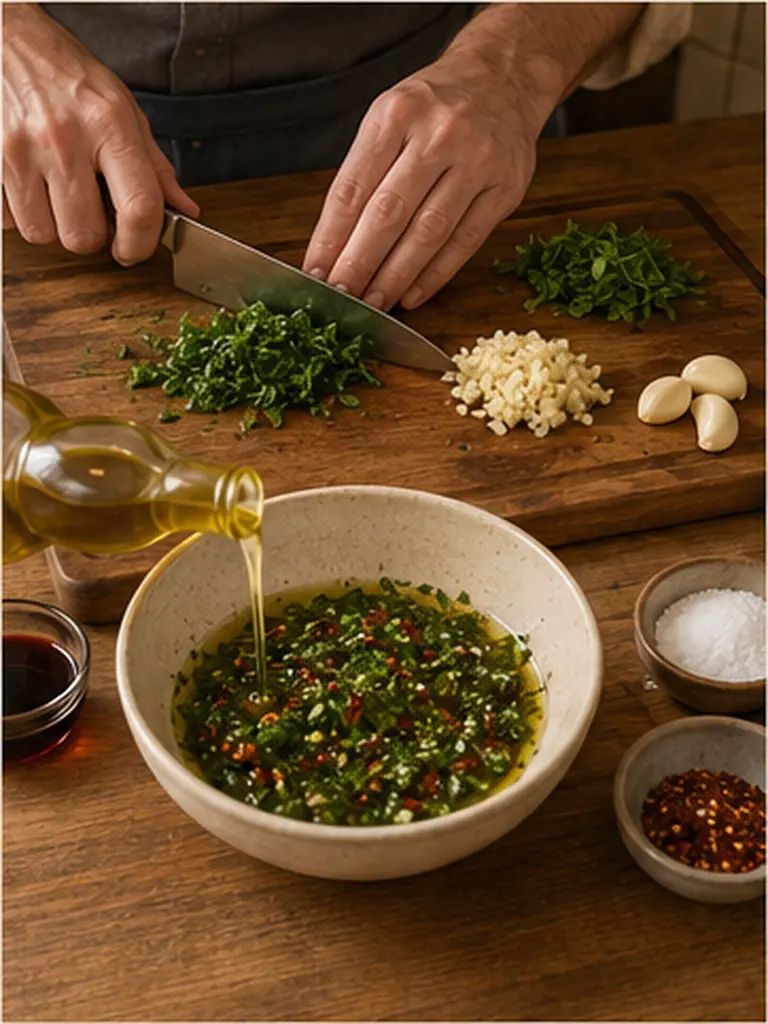
Make a textured chimichurri — Finely chop the dry parsley and oregano by hand, then stir them with the garlic, red-wine vinegar, red-pepper flakes, extra-virgin olive oil and 1/4 teaspoon of the salt. The sauce should look loose and leafy, not like a purée. Let it stand while the steaks cook; refrigerate it if holding longer than 2 hours.Pan-Seared Chimichurri Steak · AI instructional image: Chop the herbs by hand so the chimichurri stays loose and textured rather than puréed.
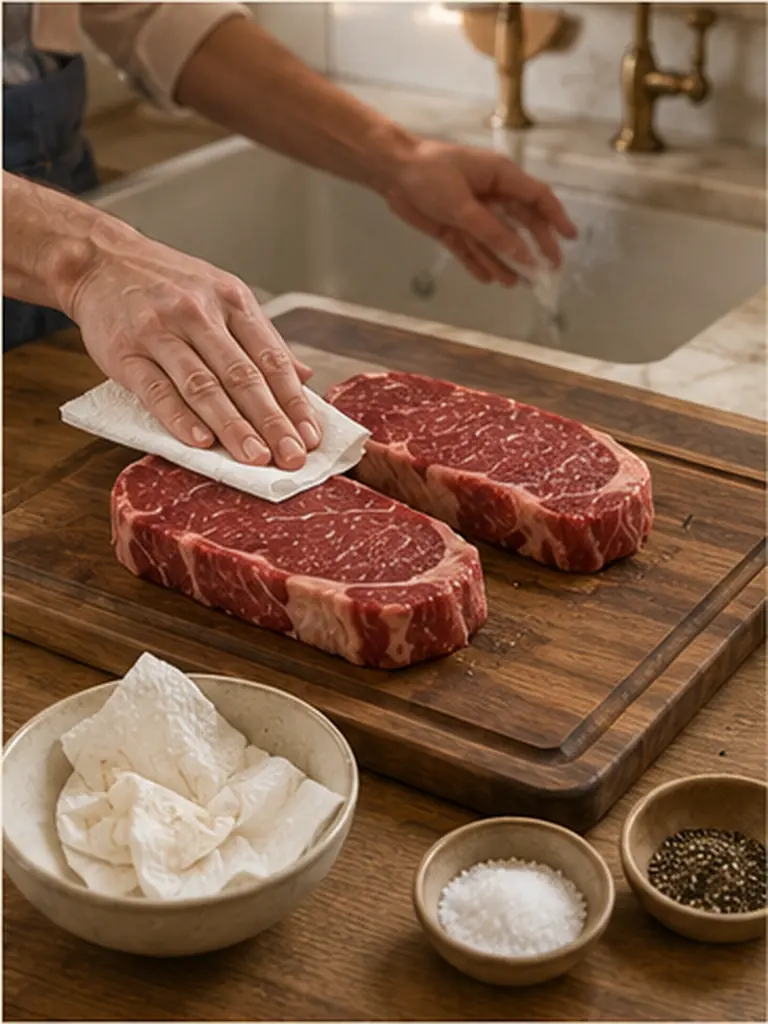
Dry and season the steaks — Pat every surface of the steaks dry with fresh paper towel. Season both sides evenly with the remaining 1 teaspoon salt and the black pepper, then let them stand for 30 minutes while the salt dissolves. Wash your hands and clean the raw-meat board and tools before continuing.Pan-Seared Chimichurri Steak · AI instructional image: Dry every surface, season evenly and wash hands and tools after contact with raw beef.
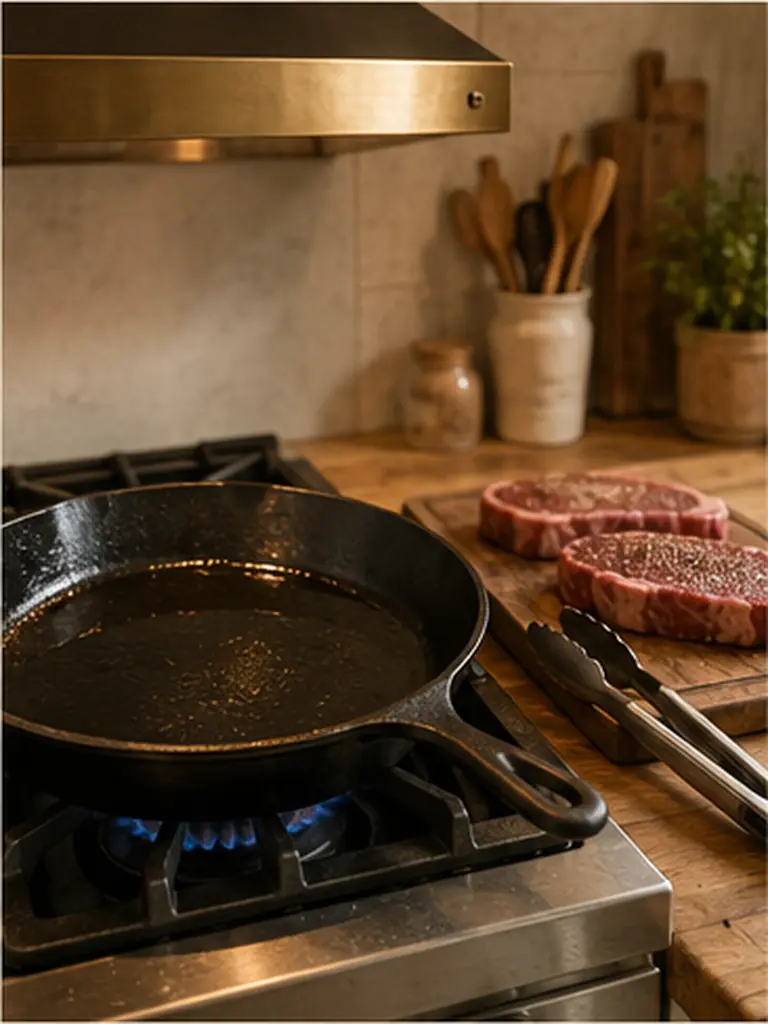
Preheat the skillet — Turn on the ventilation hood and heat the empty heavy skillet over medium-high for 2 to 3 minutes. Add the neutral oil and tilt to coat. The oil should shimmer immediately but not smoke heavily; briefly lift the skillet from the heat if it does.Pan-Seared Chimichurri Steak · AI instructional image: Preheat the empty skillet, then add the measured high-heat oil just before the steaks.
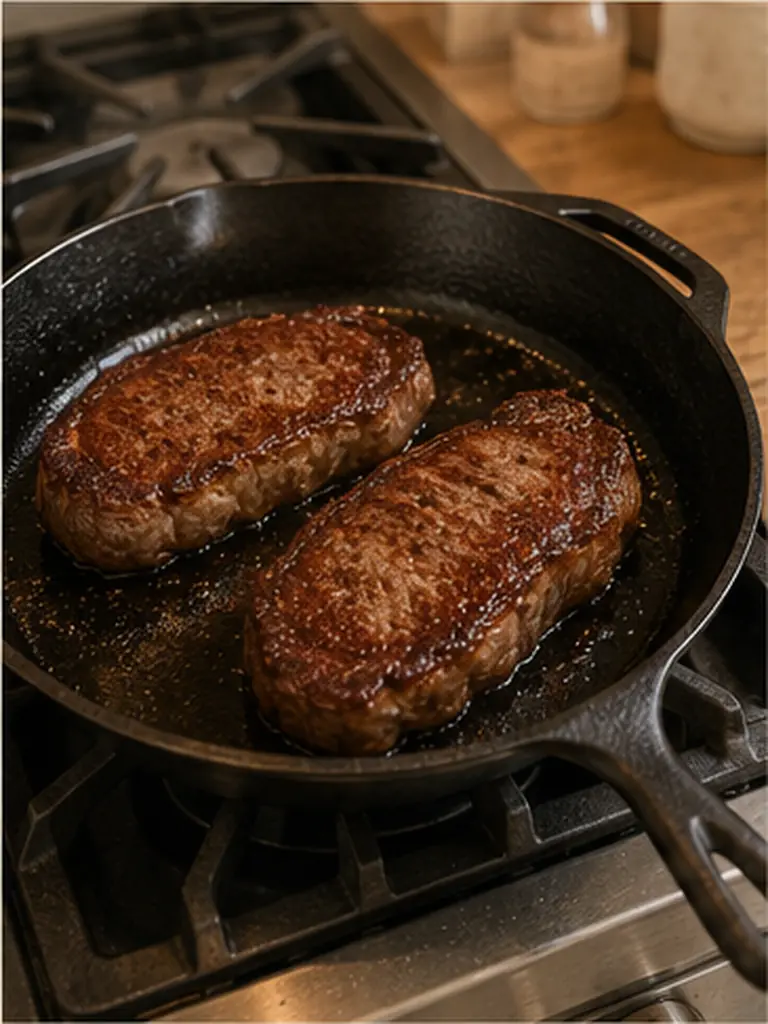
Sear the first side — Lay the steaks in the skillet away from you, leaving space between them. Sear without pressing or moving for 3 to 5 minutes, until the underside has a deep brown crust and releases readily when lifted with tongs. Reduce the heat slightly if the fond turns black.Pan-Seared Chimichurri Steak · AI instructional image: Leave the first side undisturbed until a deep crust forms and the steak releases easily.
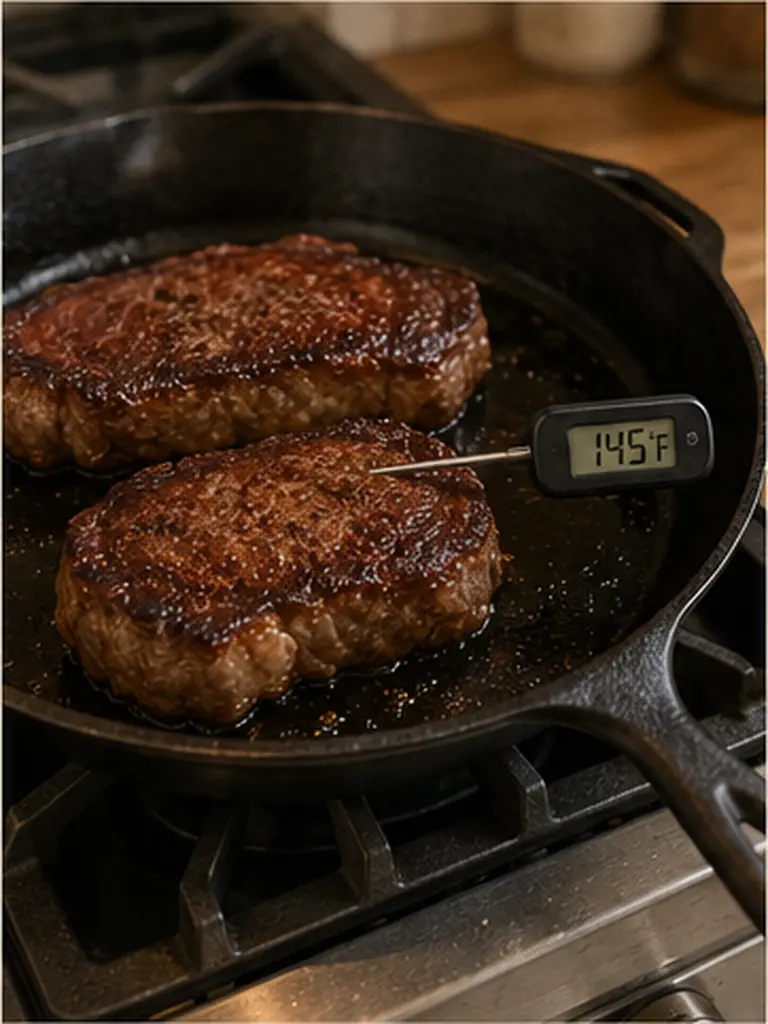
Turn and cook to temperature — Turn the steaks and cook for another 3 to 5 minutes, adjusting for their exact thickness. Insert a clean digital thermometer horizontally through the side into the centre of the thickest steak. Health Canada lists 145°F (63°C) for medium-rare whole cuts; cook to 160°F (71°C) for medium or 170°F (77°C) for well done. If the label says mechanically tenderized, turn the steak at least twice during cooking and follow its package directions.Pan-Seared Chimichurri Steak · AI instructional image: Turn once, then check the thickest steak through the side without touching the pan.
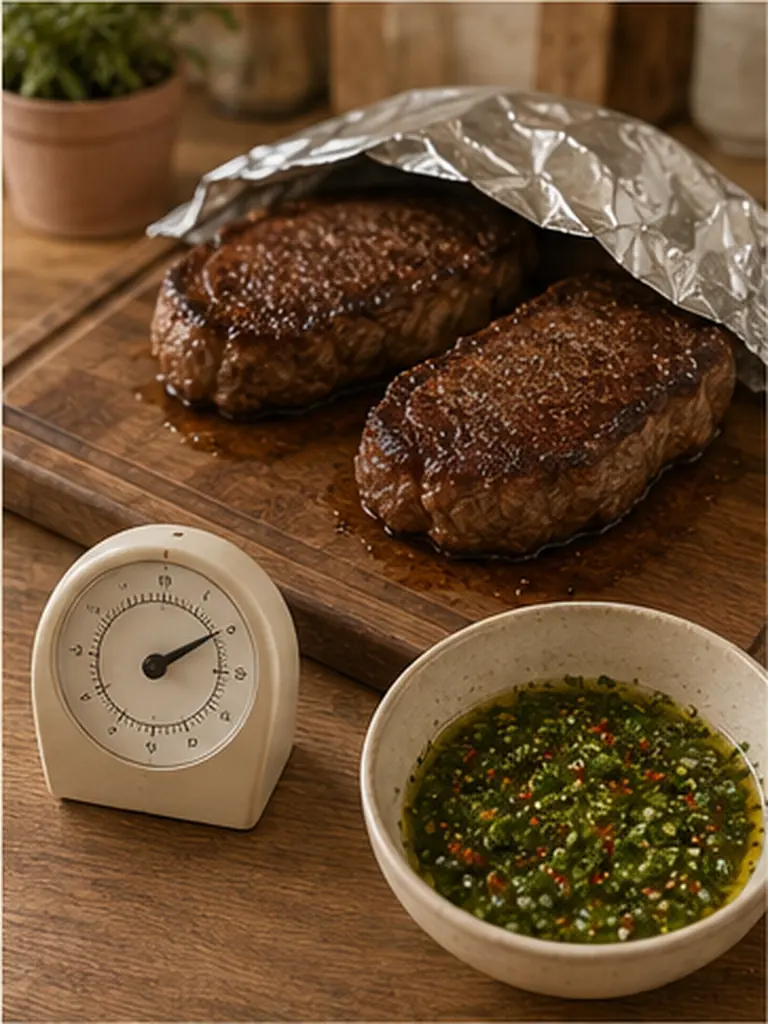
Rest before slicing — Transfer each steak to the clean board as it reaches the chosen temperature. Rest for 8 to 10 minutes so the heat and juices settle. Do not cover tightly, which softens the crust; keep the chimichurri in its separate bowl.Pan-Seared Chimichurri Steak · AI instructional image: Rest the steaks on a clean board before slicing; keep the fresh sauce separate.
Slice, serve and store — Find the direction of the long muscle fibres, then slice thinly across them. Spoon chimichurri over the steak only after slicing and serve the remaining sauce at the table. Refrigerate steak and sauce separately within 2 hours; use the steak within 3 to 4 days and the fresh sauce within 3 days. Reheat steak leftovers to 165°F (74°C), then add cold chimichurri; discard any reheated portion that is not eaten.Pan-Seared Chimichurri Steak · AI instructional image: Slice across the grain, then spoon on the chimichurri only at serving time.
Keywords: chimichurri steak · pan seared chimichurri steak · steak with chimichurri sauce · strip steak recipe · fresh parsley chimichurri · how to cook steak in a cast iron skillet
Published · Updated
READER REVIEWS
Be the first to review
☆☆☆☆☆
Loading reviews…
COMMON QUESTIONS
Pan-Seared Chimichurri Steak FAQ
What temperature should chimichurri steak reach?
Health Canada lists 145°F (63°C) for medium-rare whole cuts, 160°F (71°C) for medium and 170°F (77°C) for well done. Check the centre from the side with a clean digital thermometer.
Can I use a mechanically tenderized steak?
Yes, but follow its package directions and turn it at least twice during cooking. Health Canada gives specific handling advice because tenderization can move surface bacteria inward.
Why slice steak against the grain?
Cutting across the long visible muscle fibres shortens them, so each bite feels more tender.
Can I make chimichurri ahead?
Yes. Refrigerate it covered for up to 3 days, then let it lose some chill and stir before serving. The herbs will gradually darken.
Should chimichurri be blended?
Hand-chopping gives a loose sauce with distinct herbs. A blender can overwork the olive oil and turn the herbs into a dense paste.