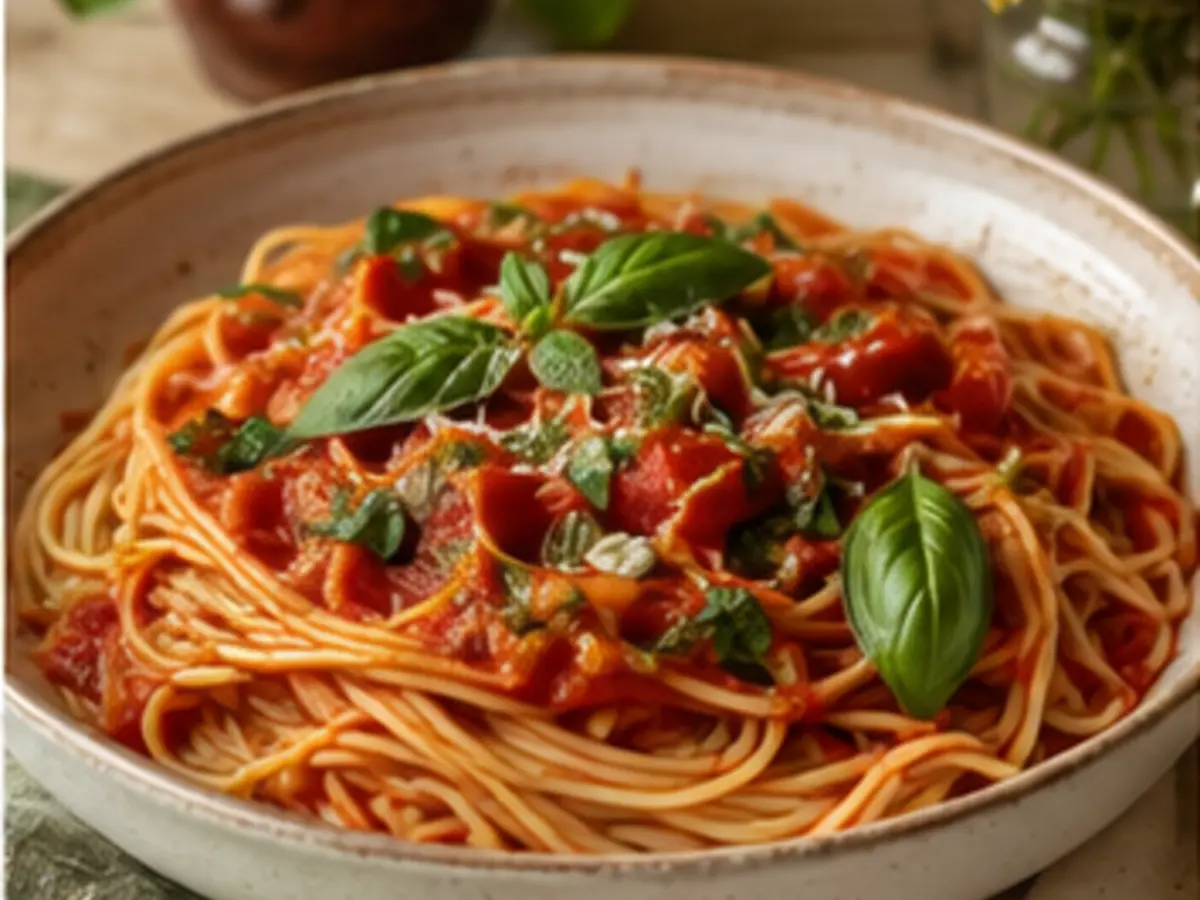
This easy tomato basil spaghetti turns a short pantry list into a glossy, comforting dinner in 35 minutes. The garlic is warmed gently so it stays sweet rather than bitter, crushed tomatoes simmer only until concentrated, and fresh basil is added twice for both depth and fragrance. The most important step happens at the end: the spaghetti finishes directly in the skillet with a little cloudy pasta water, helping the tomato sauce cling to the noodles instead of collecting at the bottom of the bowl. The detailed photographs below show the visual cues a beginner needs at every important stage.
Dietary labels are based on the listed ingredients. For allergies or celiac disease, verify every packaged ingredient and guard against cross-contamination.
SEARCHED FOR, MADE RELIABLE
Why this recipe works
Gently warming garlic releases its aroma without the bitter flavour that comes from browning.
Cooking the spaghetti one minute shy of al dente prevents it from becoming soft while it finishes in the sauce.
A short uncovered simmer concentrates canned tomatoes while preserving their fresh character.
Cloudy pasta water contains starch that helps the olive oil, tomato and Parmesan form one cohesive sauce.
Adding basil during cooking and again off the heat provides both savoury depth and a fresh garden aroma.
Ingredient notes
Spaghetti
Standard dried spaghetti gives the most predictable timing. Begin tasting one minute before the package's shortest suggested time.
Crushed tomatoes
Choose a can with tomatoes listed first and no heavy seasoning so you can control the salt, sweetness and herbs.
Garlic
Thin, even slices cook at the same rate. Keep them pale; even a few dark slices can make a simple tomato sauce taste bitter.
Fresh basil
Rinse under cool running water, dry thoroughly and tear rather than finely chopping most leaves to reduce bruising and dark edges.
Parmesan
Grate it finely and add it gradually off the heat so it melts into the sauce instead of clumping.
Pasta water
Scoop it out before draining. The cloudier it looks, the more useful starch it carries for finishing the sauce.
Practical substitutions
These are conservative alternatives based on standard kitchen practice; results may vary from the original recipe.
Use whole peeled tomatoes crushed by hand for a more textured sauce.
Pecorino Romano can replace Parmesan, but reduce the added salt.
Gluten-free spaghetti works if cooked according to its package and is not given a gluten-free badge automatically.
Troubleshooting
The sauce is watery
Keep it uncovered at a gentle simmer until a spoon leaves a trail for about one second. Do this before adding the pasta.
The sauce tastes bitter
Do not brown the garlic. If it becomes dark, discard it and begin again with fresh oil and garlic; sugar cannot correct burnt garlic.
The sauce is too acidic
Let it finish simmering before adjusting. Add sugar only 1/2 teaspoon at a time, tasting between additions.
The sauce does not cling
Do not rinse the pasta. Finish it in the skillet and toss continuously with small additions of starchy cooking water.
The Parmesan forms clumps
Remove the skillet from the heat, use finely grated cheese and sprinkle it in gradually while tossing.
The spaghetti becomes soft
Drain it one minute before the package's shortest time so it can finish cooking in the sauce.
Storage and freezing
Refrigerate leftovers in a shallow covered container within 2 hours of cooking.
Use refrigerated leftovers within 3 to 4 days.
Reheat gently on the stovetop or in the microwave until hot and steaming, adding a splash of water to loosen the sauce.
THE BUTTER & BLOOM RECIPE
Tomato Basil Spaghetti
Print-friendly layout
Preparation time
10 min
Cooking time
25 min
Total time
35 min
Yield
4 servings
Cuisine
Italian-inspired
Updated
Ingredients
12 oz (340 g) dried spaghetti
2 tablespoons extra-virgin olive oil
4 garlic cloves, thinly sliced
1/4 teaspoon red pepper flakes, optional
1 can (28 oz/796 mL) crushed tomatoes
1/2 teaspoon fine salt, plus 1 tablespoon for the pasta water
1 teaspoon granulated sugar, only if the tomatoes taste sharply acidic
1 packed cup fresh basil leaves, gently rinsed and thoroughly dried, divided
1/2 cup (45 g) finely grated Parmesan, plus more for serving
Freshly ground black pepper, to taste
Detailed directions for Tomato Basil Spaghetti
Prepare before cooking — Set a colander in the sink. Thinly slice the garlic, finely grate the Parmesan and divide the basil into two equal portions. Tear any large basil leaves with your fingers. Keep the ingredients beside the stove because the garlic cooks very quickly.
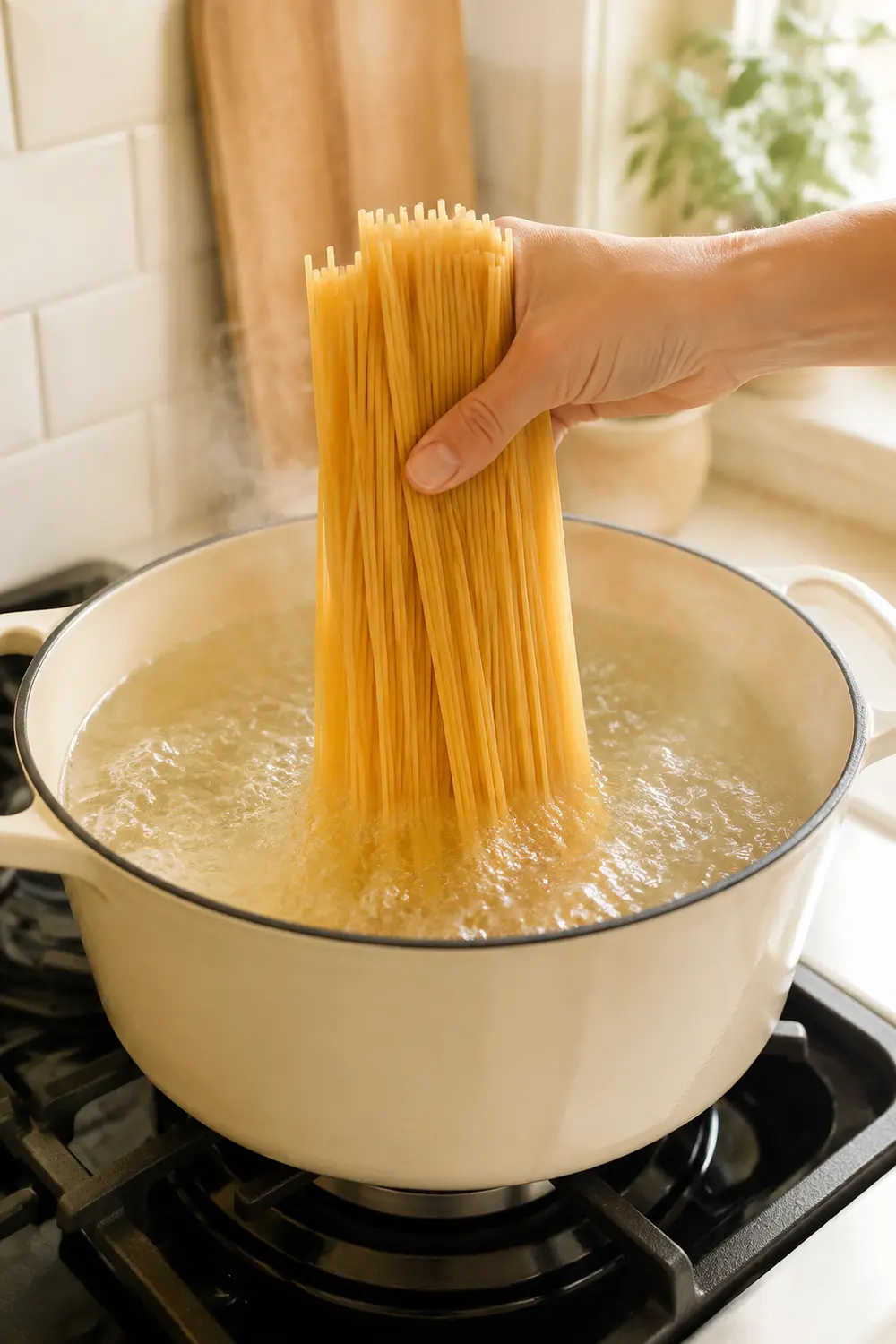
Boil the spaghetti — Fill a large pot about two-thirds full with water, cover it and bring it to a full rolling boil over high heat. Stir in 1 tablespoon salt, add the spaghetti and stir immediately so the strands do not stick together. Cook for 1 minute less than the shortest package time, stirring several times. Bite a strand: it should be tender on the outside with a tiny firm point in the centre.Tomato Basil Spaghetti · Stir as soon as the spaghetti enters the boiling water, then cook it just shy of al dente.
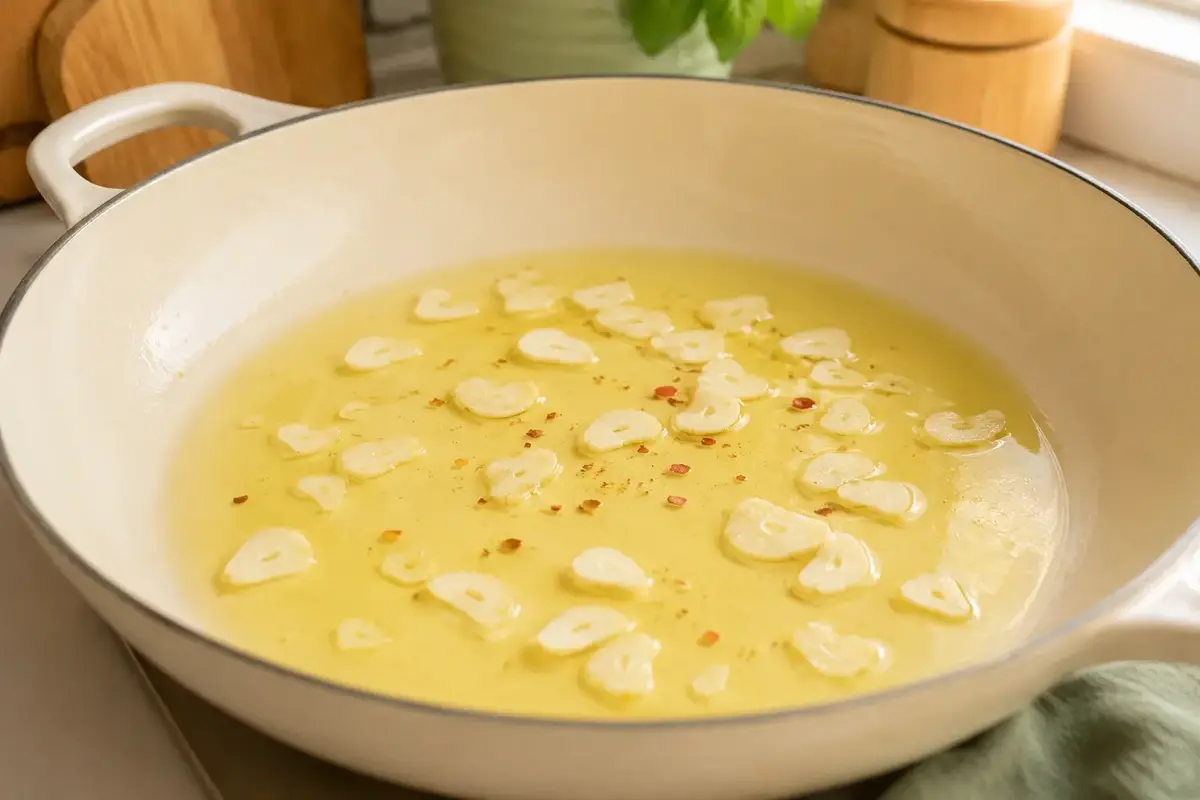
Warm the garlic gently — While the pasta cooks, pour the olive oil into a wide 12-inch skillet and set it over medium-low heat. Add the sliced garlic and optional red pepper flakes. Stir constantly for 30 to 60 seconds, just until the garlic smells fragrant and its edges begin to look translucent. Do not let it turn brown; browned garlic can make the whole sauce bitter.Tomato Basil Spaghetti · Keep the heat medium-low and stop when the garlic is fragrant and translucent, not brown.
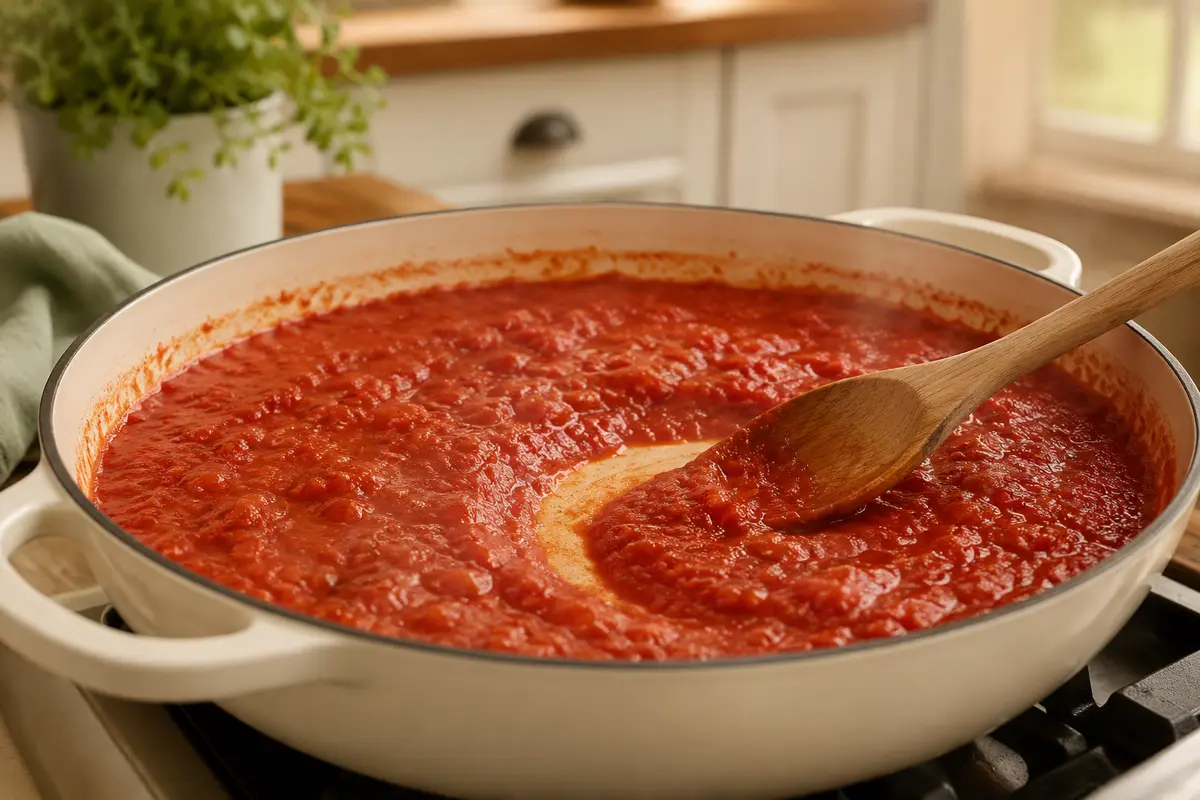
Simmer the tomato sauce — Carefully pour in the crushed tomatoes; they may sputter when they meet the oil. Add 1/2 teaspoon salt and stir well. Raise the heat to medium until small bubbles appear, then lower it to maintain a gentle, uncovered simmer. Cook for 15 to 18 minutes, stirring every few minutes and scraping the bottom, until the sauce looks slightly darker and a spoon drawn through it leaves a trail for a second before closing.Tomato Basil Spaghetti · A brief trail through the sauce shows that excess water has cooked away.
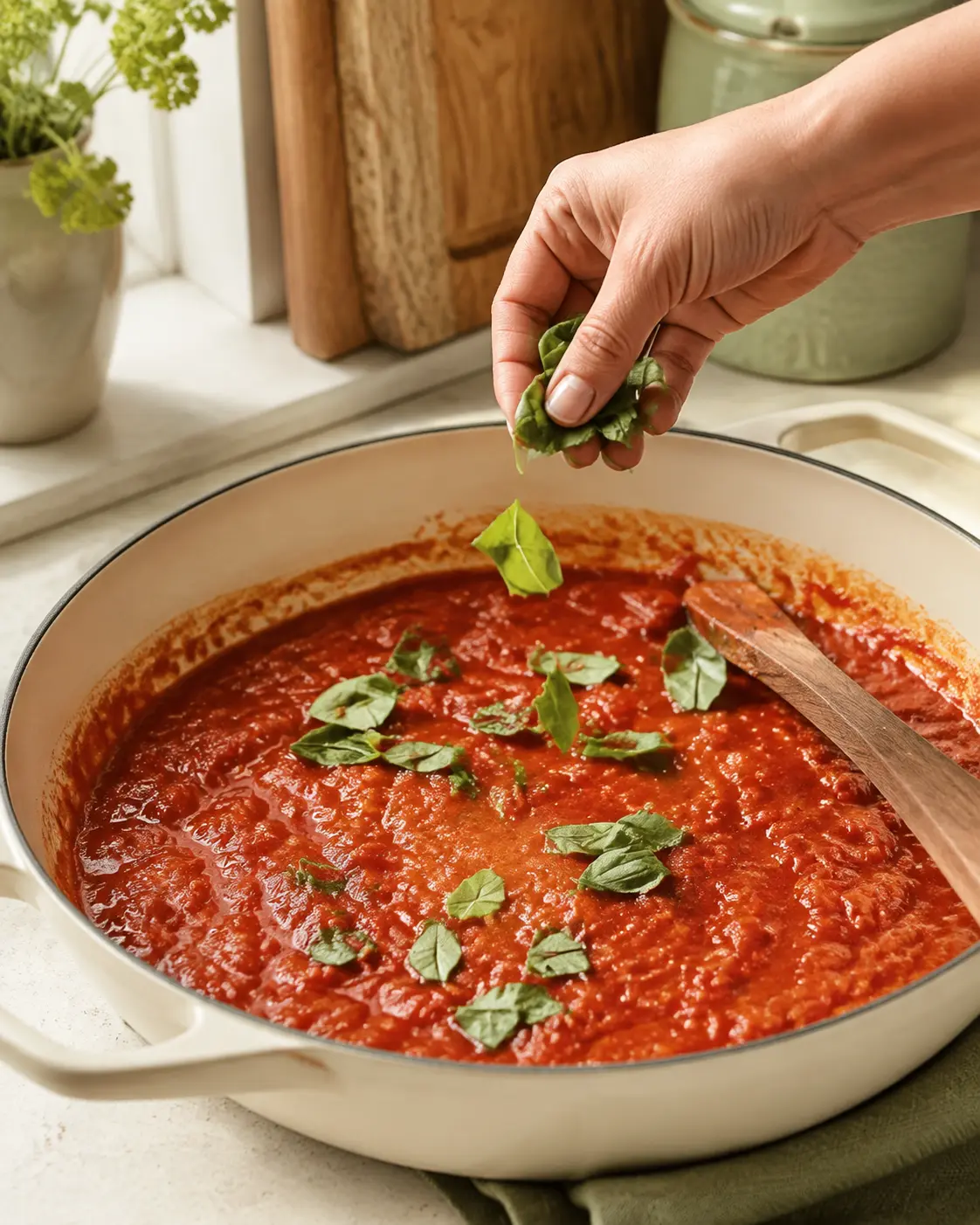
Balance the sauce and add basil — Taste the sauce with a clean spoon. Add the sugar only if the tomatoes taste noticeably sharp, beginning with 1/2 teaspoon and using no more than 1 teaspoon. Tear in half of the basil and simmer for 1 minute. Keep the remaining basil fresh for the finish.Tomato Basil Spaghetti · Add half the basil to the sauce for depth and save the rest for a fresh finish.
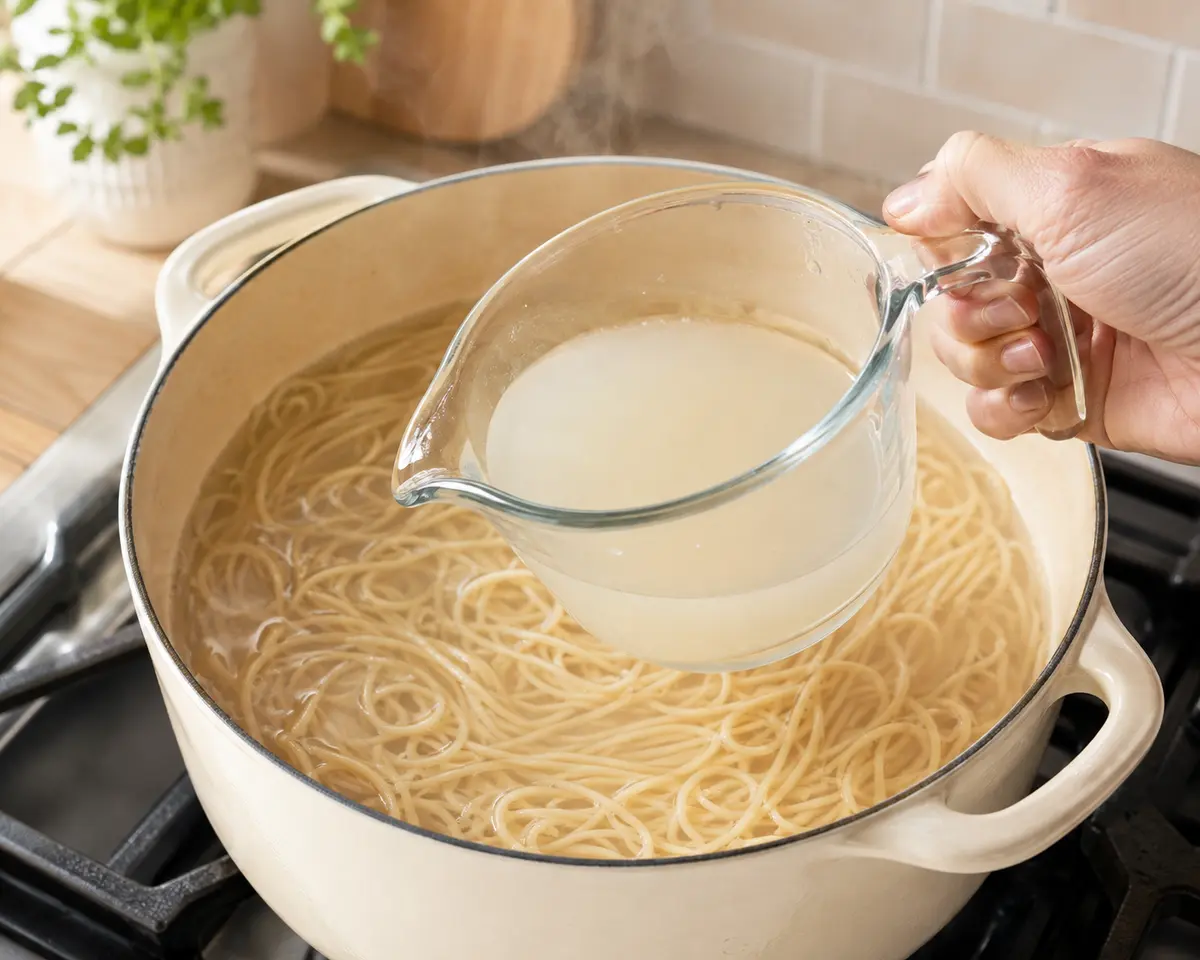
Save pasta water and drain — Before draining, carefully scoop out 1 cup of the cloudy pasta cooking water with a heatproof measuring cup. Drain the spaghetti in the colander, but do not rinse it; the starch on the noodles helps the sauce cling.Tomato Basil Spaghetti · Reserve the cloudy water before draining; its starch helps bind the sauce.
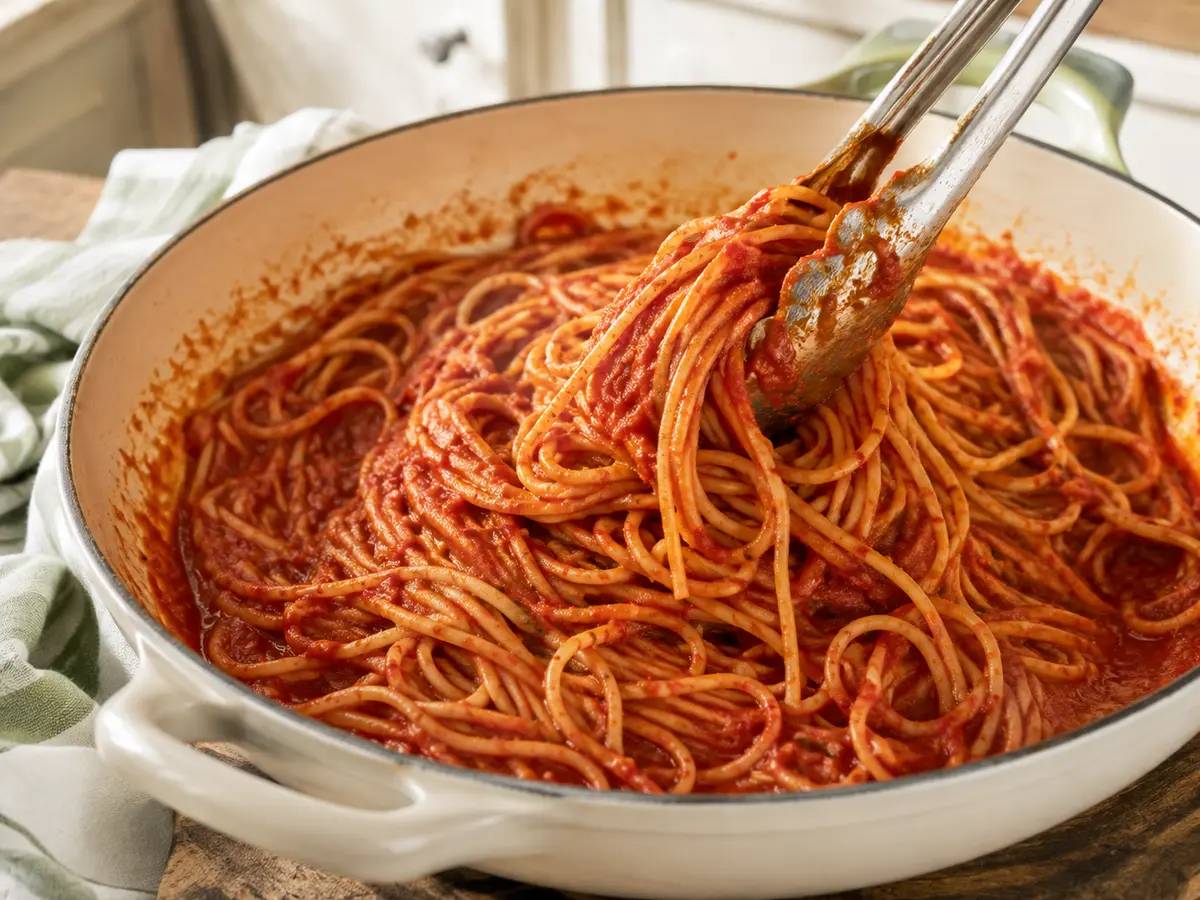
Finish the spaghetti in the skillet — Add the hot drained spaghetti directly to the tomato sauce. Set the skillet over low heat and toss continuously with tongs for 1 to 2 minutes. Add the reserved pasta water 2 tablespoons at a time only as needed. Stop when the sauce looks glossy, coats every strand and leaves no watery pool in the bottom of the skillet.Tomato Basil Spaghetti · Toss over low heat and add pasta water gradually until the sauce hugs every strand.
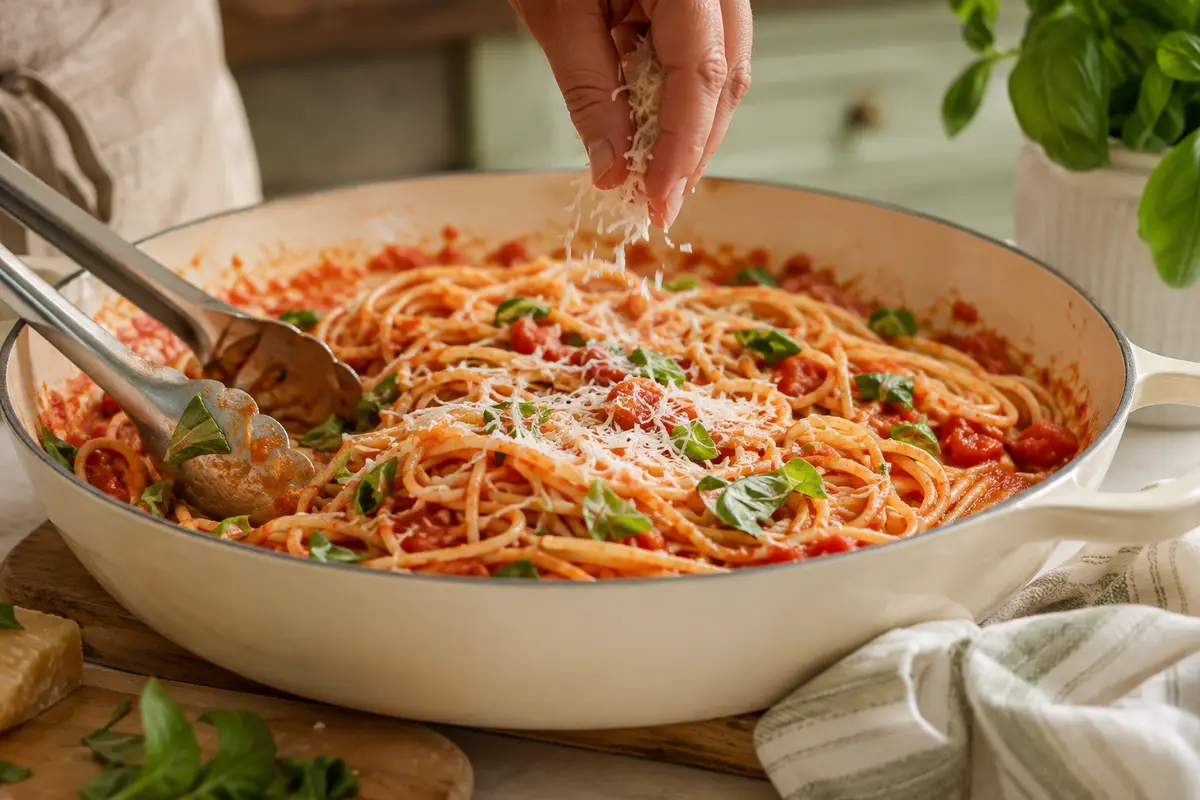
Add Parmesan off the heat — Remove the skillet from the burner. Sprinkle in the Parmesan gradually while tossing so it melts smoothly instead of forming clumps. Fold in the remaining basil and several grinds of black pepper. Taste one final time and add a small pinch of salt only if needed.Tomato Basil Spaghetti · Take the skillet off the heat before adding Parmesan so it melts smoothly.
Serve and store safely — Divide among four warm bowls and serve immediately with extra Parmesan and basil if desired. Refrigerate leftovers in a shallow covered container within 2 hours. Use within 3 to 4 days and reheat until hot and steaming, loosening the sauce with a splash of water.
Keywords: tomato basil spaghetti · easy tomato basil spaghetti recipe · spaghetti with fresh basil · simple tomato spaghetti sauce · weeknight pasta recipe · fresh basil pasta
Published · Updated
READER REVIEWS
Be the first to review
☆☆☆☆☆
Loading reviews…
COMMON QUESTIONS
Tomato Basil Spaghetti FAQ
How do I make tomato basil spaghetti?
Warm sliced garlic gently in olive oil, simmer crushed tomatoes until slightly thickened, cook spaghetti just shy of al dente, then toss the noodles in the sauce with a little starchy pasta water. Finish with Parmesan and fresh basil off the heat.
When should fresh basil be added to spaghetti sauce?
Add half during the final minute of simmering for depth and fold in the rest off the heat for a fresher aroma.
Why add pasta water to tomato sauce?
Its starch helps the tomato, olive oil and Parmesan form a glossy sauce that clings to the spaghetti rather than pooling in the bowl.
Should spaghetti be rinsed after draining?
No. Rinsing removes the surface starch that helps tomato sauce adhere.
How do I know spaghetti is al dente?
Taste a strand. It should be tender on the outside with a tiny firm point in the centre, not crunchy and not completely soft.
KEEP EXPLORING
Recipes to make next
Continue with these closely related recipes from The Butter & Bloom kitchen.