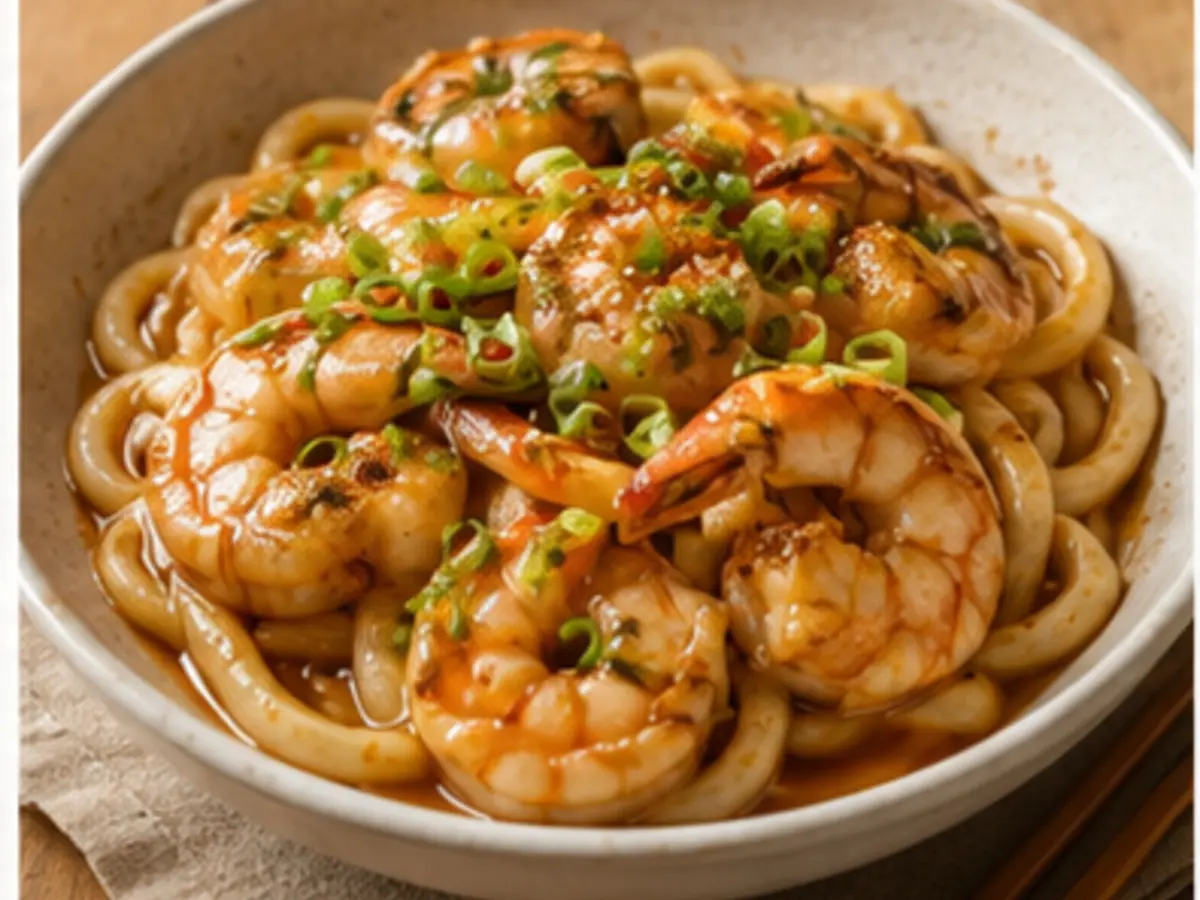
Garlic butter shrimp udon combines chewy noodles, juicy shrimp and crisp-tender bok choy in a glossy soy-mirin sauce—and it is ready in about 20 minutes. The improved method treats every fast-cooking ingredient separately: the shrimp sear in one layer and leave the pan before they can turn rubbery, the firm bok choy stems cook before the delicate leaves, and the udon is loosened only briefly before finishing in the skillet. Butter added in two stages softens the savoury sauce and gives it a silky finish. The step-by-step photographs below show the texture and colour cues to look for at each important stage.
SEARCHED FOR, MADE RELIABLE
Why this recipe works
Patting the shrimp dry and using an uncrowded skillet creates a quick sear instead of watery steam.
Removing the shrimp as soon as they turn pearly and opaque prevents overcooking while the noodles finish.
Neutral oil handles the initial higher heat, while butter is added later for flavour and a silky finish.
Bok choy stems cook before the leaves so the stems stay crisp and the greens do not become limp.
Briefly loosening vacuum-packed udon protects their signature chewy texture.
The noodles finish directly in the skillet, where butter and sauce coat every strand without a heavy pool underneath.
Ingredient notes
Udon noodles
Vacuum-packed udon is thick, springy and convenient. Follow the package, but stop as soon as the strands separate because they cook again in the skillet.
Shrimp
Use large peeled, deveined shrimp of a similar size. Thaw completely and pat very dry so they brown quickly and cook evenly.
Bok choy
Wash between the stems, dry well and separate the firm pale stems from the green leaves because they need different cooking times.
Butter and neutral oil
The neutral oil protects the shrimp during the hot sear. Butter goes in after the heat is lowered, preserving its sweet dairy flavour.
Soy sauce
Reduced-sodium soy sauce gives you better control. Taste the finished noodles before adding any extra salt.
Mirin
Mirin contributes gentle sweetness and depth. Choose cooking mirin without excessive added salt when possible.
Practical substitutions
These are conservative alternatives based on standard kitchen practice; results may vary from the original recipe.
Use another thick wheat noodle if udon is unavailable, cooking it just shy of done before adding it to the skillet.
Baby spinach can replace the bok choy leaves; add it during the final minute. Add sliced bell pepper in place of the stems if desired.
Rice vinegar is sharper than mirin. If substituting, use 2 teaspoons rice vinegar plus 1 teaspoon water and 1/2 teaspoon sugar.
Tamari may replace soy sauce, but a gluten-free result requires verified gluten-free udon and every packaged ingredient; this pasta-style dish is not automatically labelled gluten-free.
Troubleshooting
The shrimp release water instead of searing
Pat them thoroughly dry, preheat the skillet and leave space between each shrimp. Cook in two batches if the pan is crowded.
The shrimp are rubbery
Remove them as soon as they become pearly and opaque with loose C shapes, then return them only long enough to heat through.
The garlic tastes bitter
Lower the heat before adding butter and garlic. Stir constantly and add the leafy greens as soon as the garlic smells fragrant.
The sauce is too salty
Use reduced-sodium soy sauce and loosen the noodles with plain water rather than adding more sauce.
The noodles clump
Loosen them according to the package, drain well and lift continuously with tongs in the skillet. Add water one tablespoon at a time if needed.
The sauce is watery
Keep tossing over medium heat for another 30 seconds before returning the shrimp. Do not add water unless the noodles look tight or sticky.
Storage and freezing
Refrigerate the noodles and shrimp in a shallow covered container within 2 hours of cooking.
Use refrigerated leftovers within 2 days for the best seafood quality.
Reheat gently in a skillet or microwave until hot and steaming, adding a small splash of water. Avoid prolonged high heat, which toughens shrimp and softens udon.
THE BUTTER & BLOOM RECIPE
Garlic Butter Shrimp Udon
Print-friendly layout
Preparation time
10 min
Cooking time
10 min
Total time
20 min
Yield
4 servings
Cuisine
Japanese-inspired
Updated
Ingredients
2 packages vacuum-packed udon noodles, about 14 oz (400 g) total
1 lb (454 g) large raw shrimp, peeled and deveined, thawed if frozen
1/2 teaspoon fine salt
1/4 teaspoon freshly ground black pepper
1 tablespoon neutral cooking oil, such as avocado or canola oil
3 tablespoons unsalted butter, divided
4 garlic cloves, finely minced
2 tablespoons reduced-sodium soy sauce
1 tablespoon mirin
1 teaspoon toasted sesame oil
2 baby bok choy, washed and dried
3 scallions, thinly sliced, white and green parts separated
1 teaspoon toasted sesame seeds, optional
Detailed directions for Garlic Butter Shrimp Udon
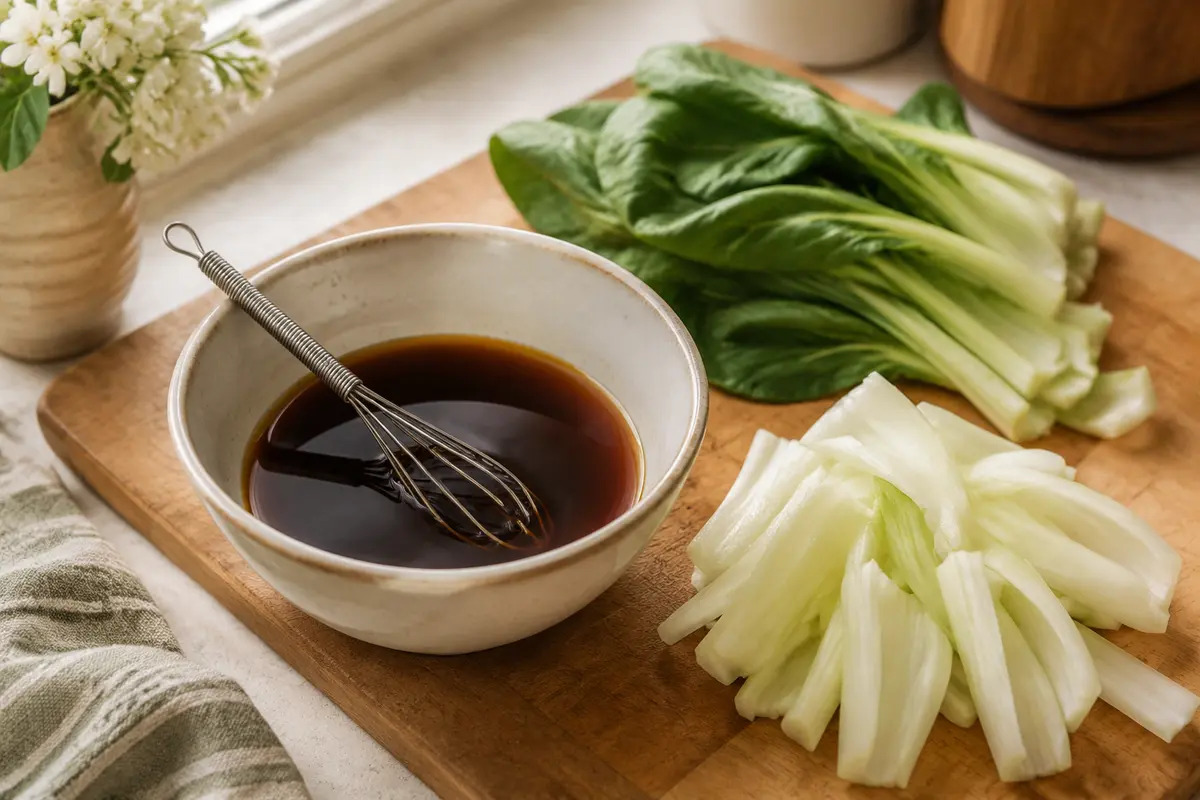
Prepare the sauce and vegetables — In a small bowl, whisk together the soy sauce, mirin and toasted sesame oil. Cut the pale bok choy stems crosswise into 1/2-inch pieces and keep them separate from the leafy green tops; roughly chop the leaves. Mince the garlic and slice the scallions, keeping the white and green parts separate.Garlic Butter Shrimp Udon · Mix the sauce first and separate the bok choy stems from the leaves so each cooks for the right amount of time.
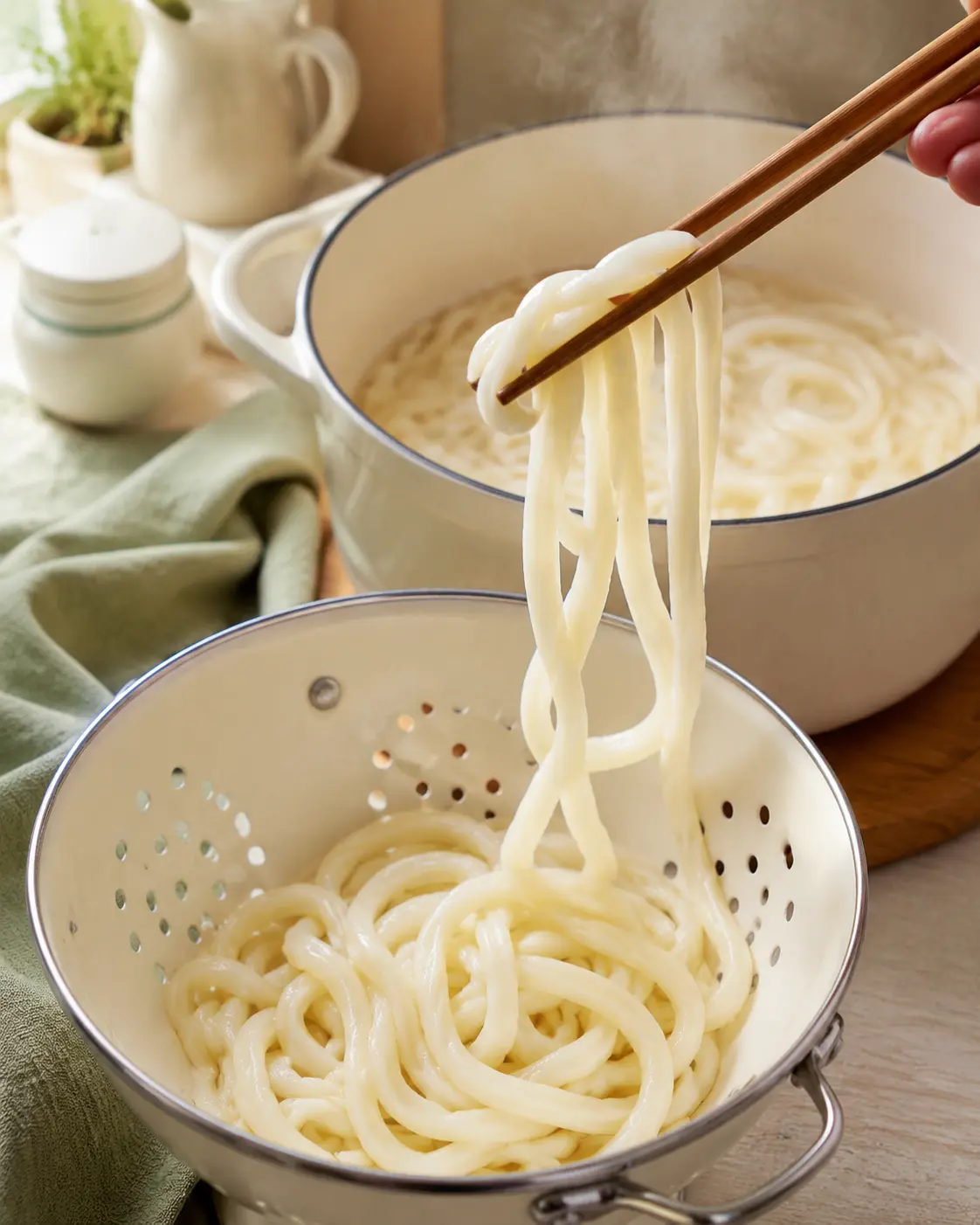
Loosen the udon — Prepare the udon only until the thick strands separate, following the package directions; most vacuum-packed udon needs only 30 to 60 seconds in hot water. Gently loosen the noodles with chopsticks or tongs, drain thoroughly and set aside. Do not cook them until soft because they will finish in the skillet.Garlic Butter Shrimp Udon · Loosen the udon only until the strands separate; they will finish cooking in the skillet.
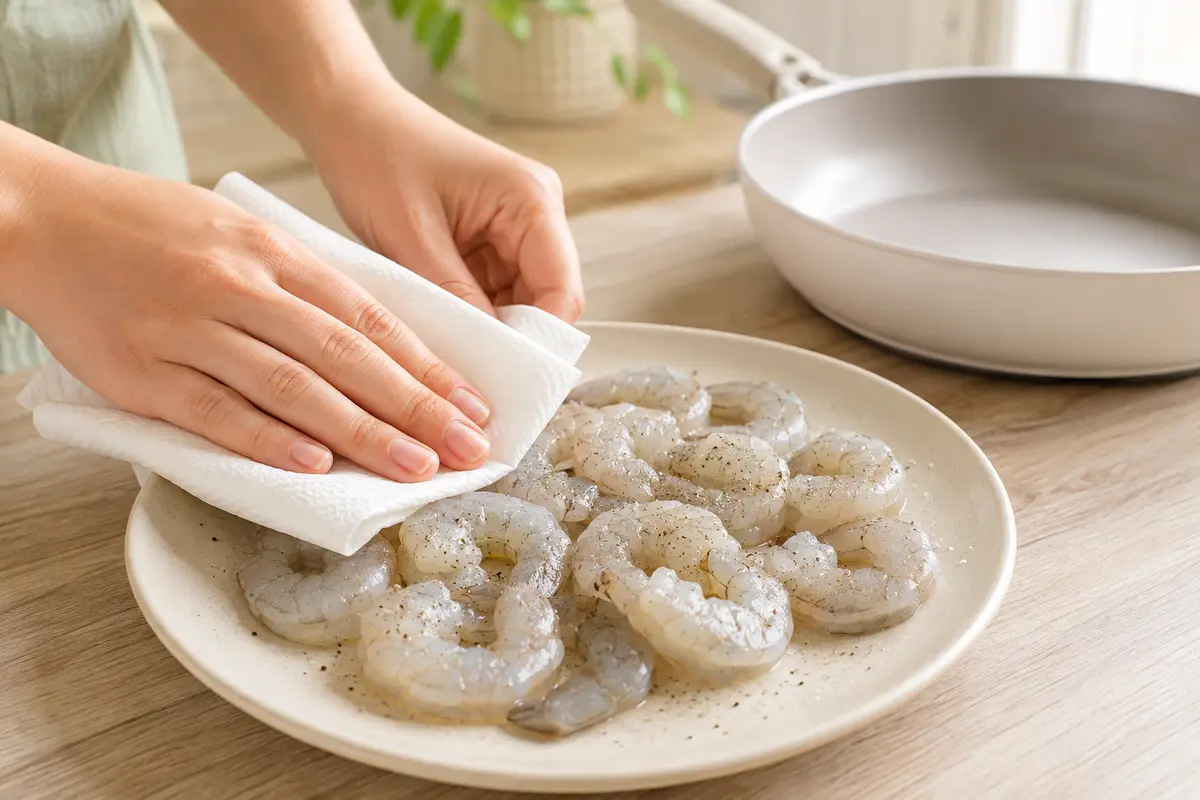
Dry and season the shrimp — If the shrimp are frozen, thaw them safely in the refrigerator overnight or in a sealed bag submerged in cold water, then cook immediately. Pat every shrimp very dry with paper towel and season both sides with the salt and pepper. Wash your hands and clean any surface that touched raw shrimp before continuing.Garlic Butter Shrimp Udon · A dry surface helps the shrimp sear instead of releasing water and steaming.
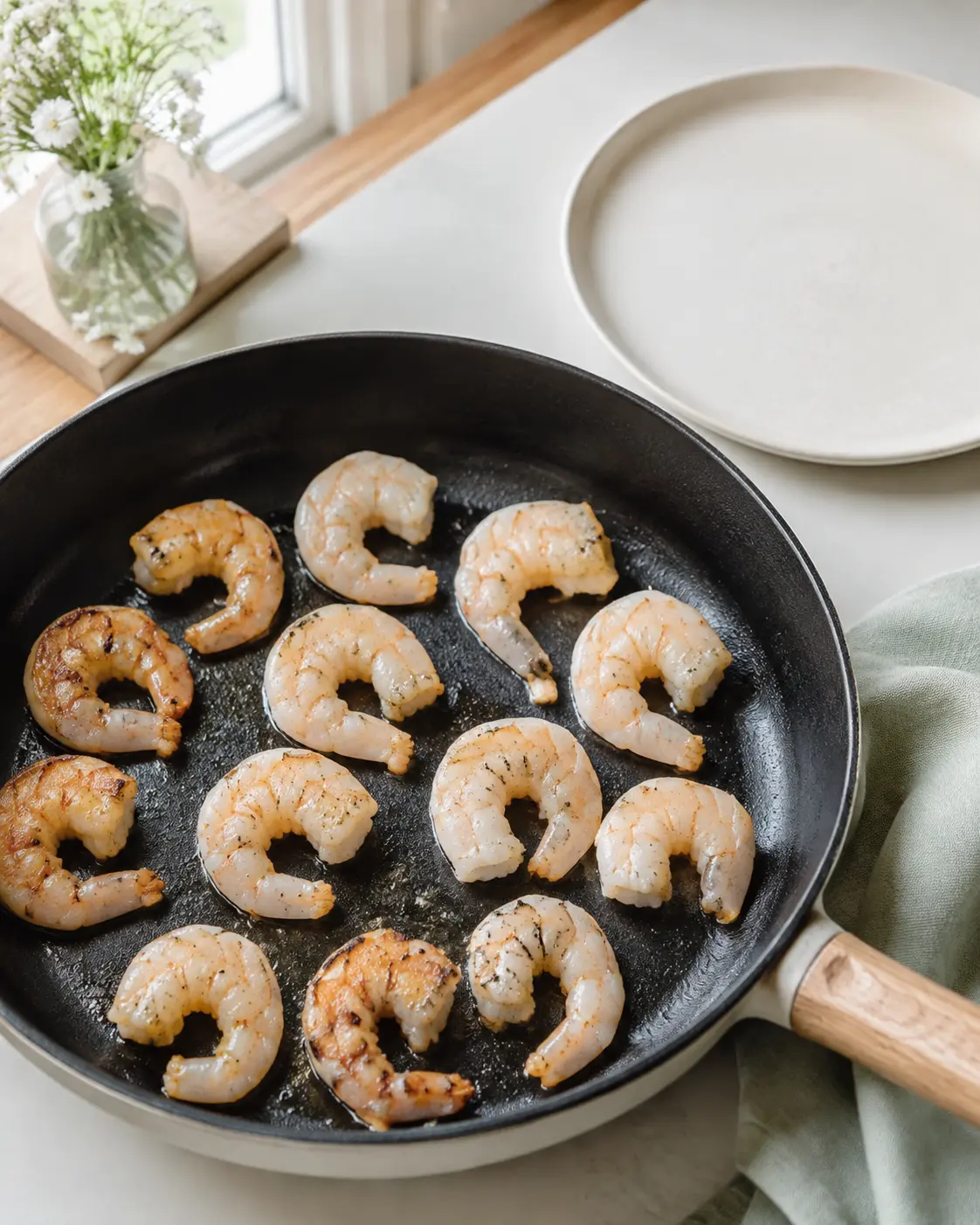
Sear the shrimp — Heat a large 12-inch skillet over medium-high heat for 1 minute, then add the neutral oil. Arrange the shrimp in one uncrowded layer. Cook without moving for 1 to 2 minutes, flip each shrimp and cook the second side for about 1 minute. Transfer them to a clean plate as soon as the flesh is pearly and opaque and the shrimp form loose C shapes; tightly curled O shapes usually mean they have cooked too long. The thickest shrimp should reach 145°F (63°C).Garlic Butter Shrimp Udon · Remove the shrimp as soon as they are pearly and opaque; they will warm once more at the end.
Build the garlic-butter vegetables — Reduce the heat to medium. Melt 2 tablespoons butter in the same skillet, scraping up the browned flavour from the bottom. Add the bok choy stems and scallion whites; cook for 2 minutes until the stems brighten but remain crisp. Add the garlic and leafy bok choy tops and stir for 30 to 45 seconds, just until fragrant and wilted. Do not brown the garlic.
Toss the noodles with the sauce — Add the drained udon and the prepared soy-mirin sauce. Use tongs to lift and turn the noodles continuously for 1 to 2 minutes, until the strands are hot, separated and evenly glossy. If the sauce looks tight or the noodles stick, add water 1 tablespoon at a time; there should not be a watery pool in the pan.
Finish without overcooking — Return the shrimp and any juices on the plate to the skillet. Add the remaining 1 tablespoon butter and toss for only 30 to 60 seconds, until the butter melts and the shrimp are hot throughout. Remove the skillet from the heat immediately. Fold in the scallion greens and optional sesame seeds, then taste before adding any extra salt because soy sauce is already salty.
Serve and store safely — Divide the udon among four warm bowls and serve immediately. Refrigerate leftovers in a shallow covered container within 2 hours and use within 2 days. Reheat gently until hot and steaming; prolonged high heat will toughen the shrimp.
Keywords: garlic butter shrimp udon · shrimp udon noodles · 20 minute udon recipe · garlic butter noodles with shrimp · shrimp and bok choy noodles · easy shrimp udon stir fry
Published · Updated
READER REVIEWS
Be the first to review
☆☆☆☆☆
Loading reviews…
COMMON QUESTIONS
Garlic Butter Shrimp Udon FAQ
How do I make garlic butter shrimp udon?
Sear dry seasoned shrimp and remove them, cook bok choy stems followed by garlic and leaves, toss briefly loosened udon with soy-mirin sauce, then finish with butter and return the shrimp for less than a minute.
How long should shrimp cook for udon?
Large shrimp usually need 1 to 2 minutes on the first side and about 1 minute on the second, followed by only 30 to 60 seconds when returned to the noodles.
How do I know shrimp are cooked?
The flesh should be firm, pearly and opaque and the shrimp should form loose C shapes. The thickest shrimp should reach 145°F (63°C).
Do vacuum-packed udon noodles need boiling?
Follow the package; most need only 30 to 60 seconds in hot water to separate before they finish in the sauce.
Can frozen shrimp be used?
Yes. Thaw overnight in the refrigerator or in a sealed bag submerged in cold water, then cook immediately. Drain and pat very dry before seasoning.
Can garlic butter shrimp udon be made ahead?
It is best freshly cooked. You can mix the sauce, cut the vegetables and slice the scallions earlier in the day, but keep everything refrigerated and cook the shrimp and noodles just before serving.
KEEP EXPLORING
Recipes to make next
Continue with these closely related recipes from The Butter & Bloom kitchen.